Technotrans Dampening Solution Unit Service Guide
In an offset printing house, the technotrans dampening solution unit works quietly next to the press until something drifts. The ink and water balance goes unstable, the printer adds more additive, the plates start to tone, and only then does someone look at the unit in the corner. Most of these problems start weeks earlier with values that nobody logged: conductivity creeping up, solution temperature a few degrees too high, a filter that is half blocked, a conductivity probe that has not been calibrated since installation.
This guide is written for maintenance teams and press room managers who run technotrans units such as the beta.c and alpha.c series. It explains what the unit controls, which values to check, how we calibrate the conductivity probe, how often to clean and change filters, and what the typical alarms mean in practice.
What a technotrans dampening solution unit actually controls
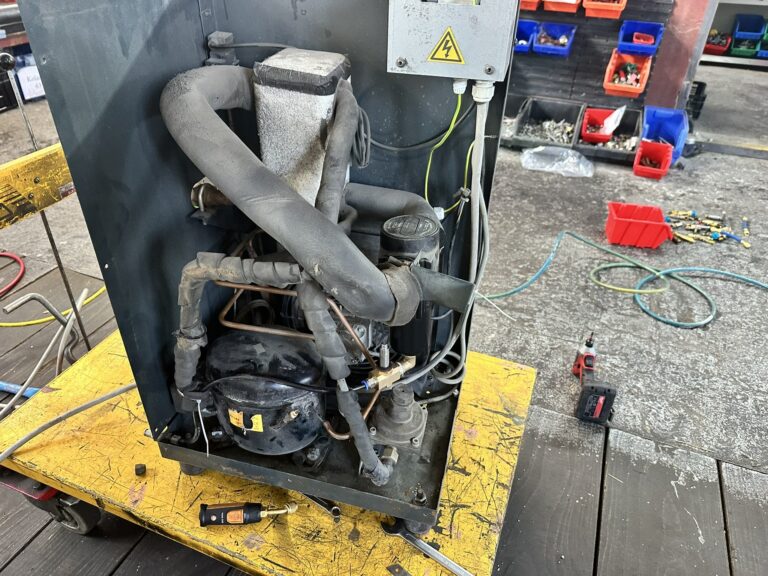
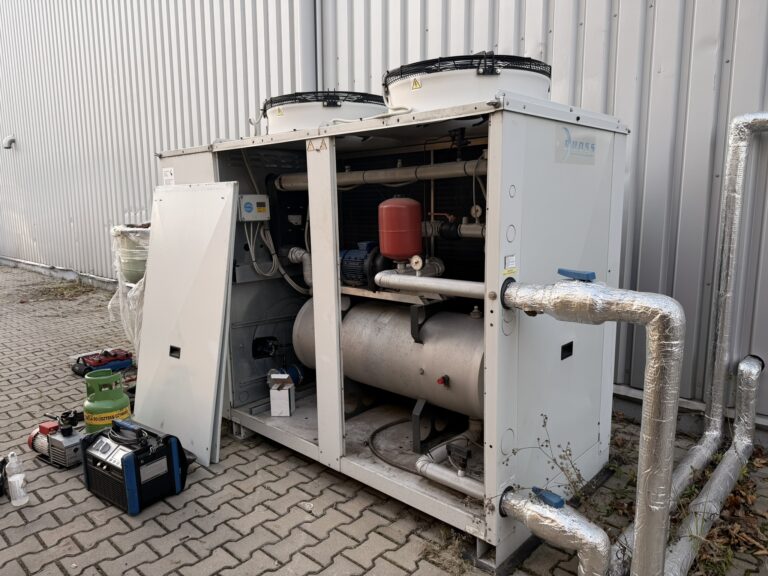
A technotrans dampening solution unit prepares, circulates and cools the fountain solution for the dampening system of the press. Depending on the version, one housing combines a solution tank, circulation pumps, a refrigeration circuit with compressor and condenser, a dosing system for fountain additive and alcohol (IPA), filtration and a controller with sensors for temperature, level and conductivity.
From the printer’s point of view, the unit has three jobs:
- Keep the solution temperature stable, usually in the range of 10 to 15 °C at the fountain trays, so the dampening rollers behave the same in the morning and in the afternoon.
- Keep the chemistry stable: the right share of additive and alcohol, which the controller watches through conductivity and alcohol measurement.
- Keep the solution clean: paper dust, coating particles and ink residues must be filtered out before they reach the rollers.
If one of these three drifts, the press operator compensates by hand. That works for a while, but it hides the real fault and usually increases the consumption of additive and alcohol.
Conductivity and temperature: the two values to watch
Conductivity is the simplest indicator of what is going on in the solution. The base water has its own value (often a few hundred µS/cm, depending on hardness and treatment). The additive raises it to a working value that the chemical supplier specifies for the given product and dosage, typically somewhere between about 800 and 1,500 µS/cm. During production, the value rises slowly as calcium from paper coatings, ink components and other contaminants accumulate in the tank.
A practical rule we use on site: write down the conductivity right after a fresh fill and then once a day. A steady rise of a few percent per day is normal. A jump of several hundred µS/cm in a short time points either to contamination (for example after a cleaning agent got into the circuit) or to a measurement fault. If the unit doses additive based on conductivity, a wrong reading means wrong dosing, so the chemistry drifts while the display still looks fine.
Temperature is the second value. When the solution runs warmer than the set point, alcohol evaporates faster, the dampening film changes and the press reacts. The usual causes are on the refrigeration side: a condenser coated with dust and paper fibres, a warm press room in summer, too little air around the unit, or a refrigerant circuit that has lost part of its charge. These faults rarely appear overnight. The cooling capacity drops step by step until a hot day pushes the unit into a high pressure alarm.
Calibrating the conductivity probe
The conductivity probe sits in the solution all the time, so it collects deposits. A thin layer on the electrodes is enough to shift the reading. We calibrate the probe as part of each planned visit and always after a series of unexplained dosing problems. The procedure we follow looks like this:
- Read the current value. We compare the display with a calibrated hand-held conductivity meter in the same solution and at the same temperature. The difference tells us how far the probe has drifted.
- Clean the probe. The probe is removed and cleaned according to the manufacturer’s instructions, without scratching the electrodes. Mineral and ink deposits are the most common reason for drift.
- Check temperature compensation. Conductivity depends strongly on temperature, so the controller converts the reading to a reference temperature, usually 25 °C. A wrong compensation coefficient or a faulty temperature sensor gives a reading that changes with the solution temperature even when the chemistry is constant.
- Calibrate with a reference solution. We use a certified reference solution close to the working range (for example 1,413 µS/cm at 25 °C) and set the controller to that value. Where the controller allows a two point calibration, we use two solutions.
- Verify and record. After calibration the probe goes back into the tank, we compare the reading with the hand-held meter again and note both values in the service report together with the date.
If a probe cannot be calibrated into tolerance after cleaning, it is worn and should be replaced. A worn probe tends to give a slowly falling reading, which makes the controller overdose additive.
Filters and cleaning intervals
Filtration decides how long the solution stays usable. Depending on the configuration, the unit has bag filters, cartridge filters or a separate filtration module. A blocked filter reduces flow to the press, raises the temperature at the fountain trays and lets particles bypass the filter if the housing is not sealed properly.
| Task | Typical interval | What we look at |
|---|---|---|
| Filter check and change | Weekly check, change by pressure drop or visual condition | Pressure difference, colour of the filter, seal of the housing |
| Solution change and tank cleaning | Every 4 to 8 weeks, depending on paper, ink and volume | Sludge at the bottom, biofilm on walls, smell |
| System cleaning with a dedicated cleaner | At least once or twice a year, and after biological contamination | Hoses, return lines, fountain trays |
| Condenser cleaning | Every 3 to 6 months in a dusty press room | Fins, fan, airflow around the unit |
| Probe calibration | At every planned visit | Drift against a reference meter |
Cleaning only the tank is not enough. Biofilm sits in hoses and return lines and contaminates fresh solution within days. When we clean a system, we run the cleaner through the whole circuit, flush it with water and only then fill fresh solution.
Typical alarms and what they usually mean
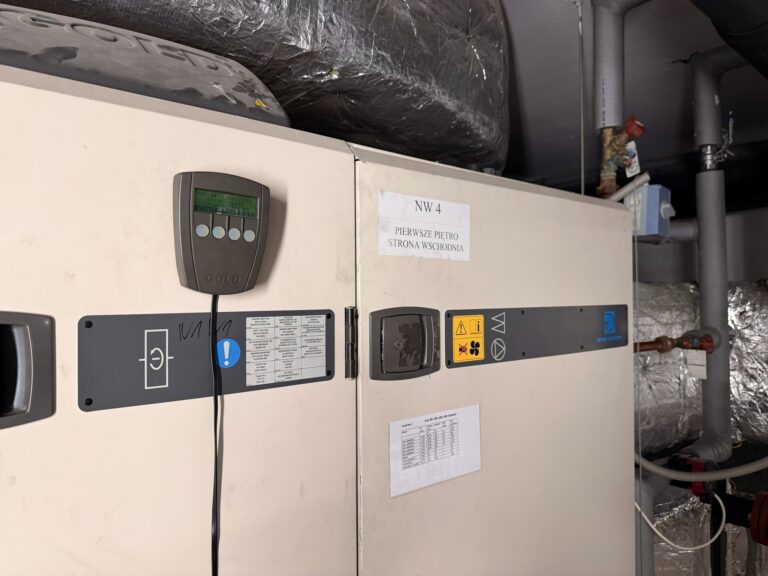
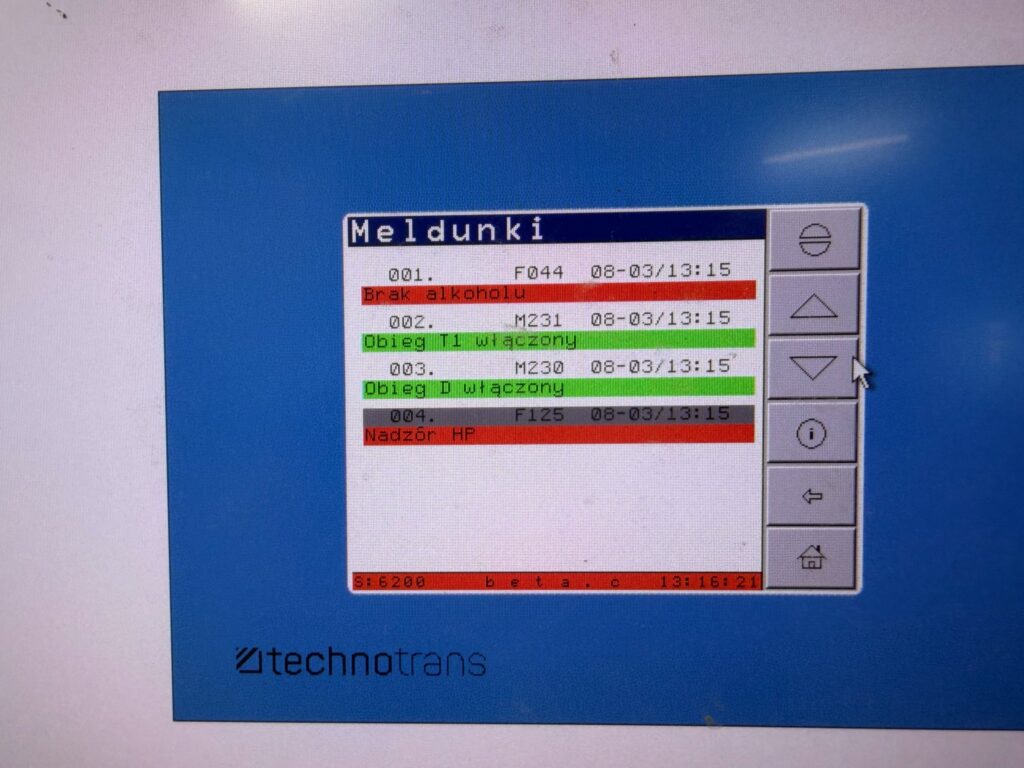
Alarm texts differ between controller generations, but the categories are always similar. The photo above shows a typical alarm list on a beta.c controller with a missing alcohol message next to a high pressure monitoring fault. These are the alarms we see most often:
- High pressure (HP) in the refrigeration circuit. Dirty condenser, failed condenser fan, hot air recirculating around the unit or a press room above the design temperature. Resetting it again and again without finding the cause shortens compressor life.
- Solution temperature out of tolerance. Reduced cooling capacity, a refrigerant leak, a faulty temperature sensor or a blocked filter that restricts flow.
- Conductivity too high or too low. Contaminated solution, a dosing pump fault, an empty additive container or a probe that needs cleaning and calibration.
- Alcohol out of range or missing. Empty IPA supply, a fault in the alcohol measuring and dosing module, air in the dosing line.
- Level alarms. Water supply valve fault, a leaking float switch or a return line that overflows the tank.
- Pump or flow alarms. Worn pump seals, a blocked strainer, air in the circuit.
The alarm history in the controller is valuable. We read it before touching anything, because the order and frequency of messages often shows the real cause better than the alarm that is active right now.
How we service technotrans units
A planned visit covers both sides of the unit: the chemistry and the refrigeration. We check temperatures, pressures and currents of the refrigeration circuit, clean the condenser, test pumps and valves, calibrate the conductivity probe, check the dosing of additive and alcohol, inspect filters and record everything in a report with measured values. On larger installations, we also check the cooling of inking units and the alcohol dosing module.
For printing houses that run several presses, we recommend a fixed maintenance plan instead of call-outs after alarms. You can read more about our work in printing on the page printing industry cooling and about service contracts on planned maintenance. Technical documentation for the units is available from the manufacturer, technotrans.
Diagnostics on site start from 800 EUR net, further work is charged at 115 EUR net per hour and travel at 0.75 EUR net per km. Send us the unit type from the nameplate and the alarm list through the contact form or by e-mail to info@skic.com.pl, and we will plan the visit.