
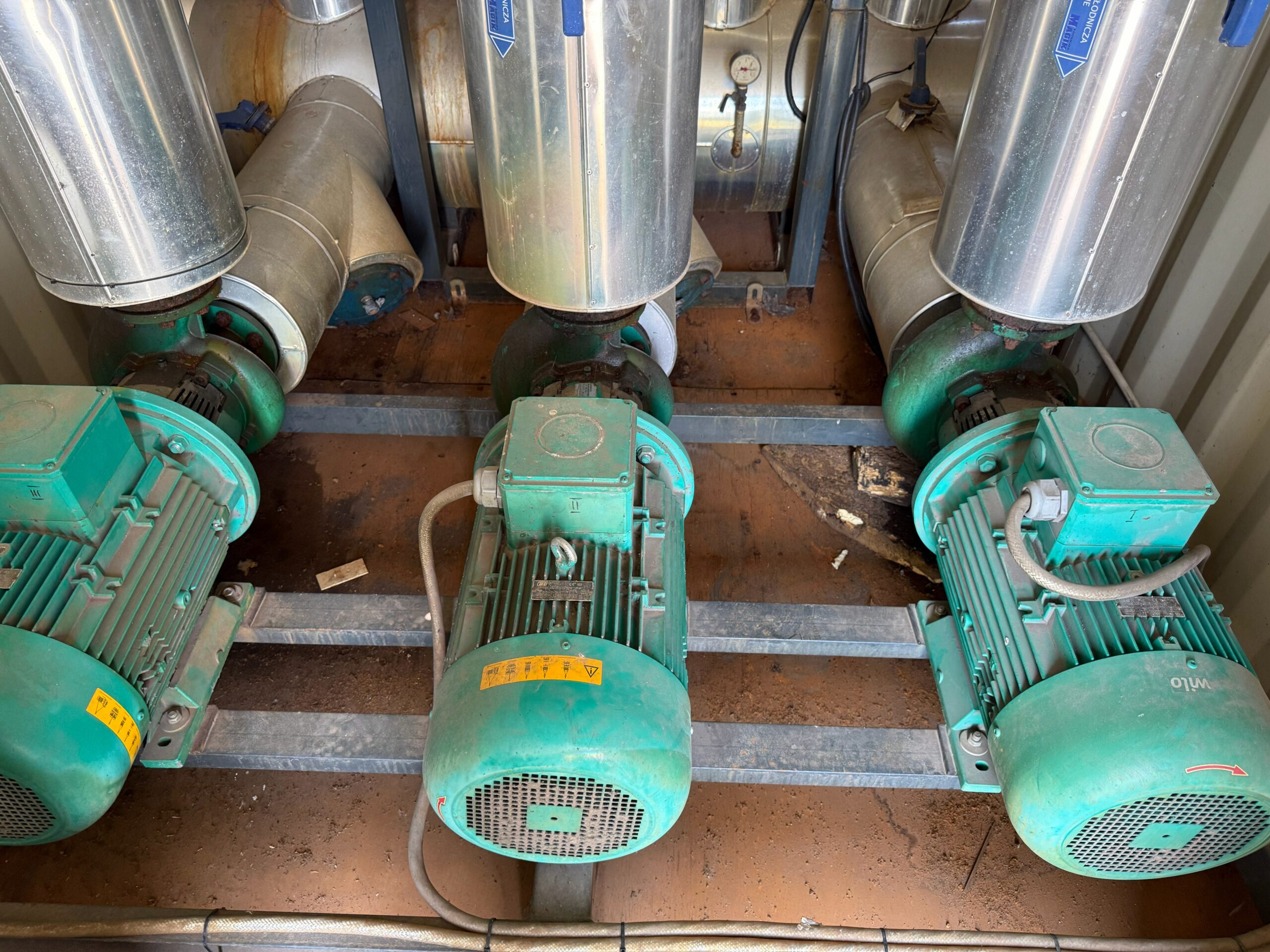
Mobile condensing unit service
Condensing unit service for cold rooms, freezers and production cooling in plants, warehouses and shops. Our mobile teams measure the circuit under load, find the cause of the fault and leave a report after every visit.
F-gas company certificate. A report with measurements after every visit. Mobile service in Poland and the EU.
Condensing units in daily operation
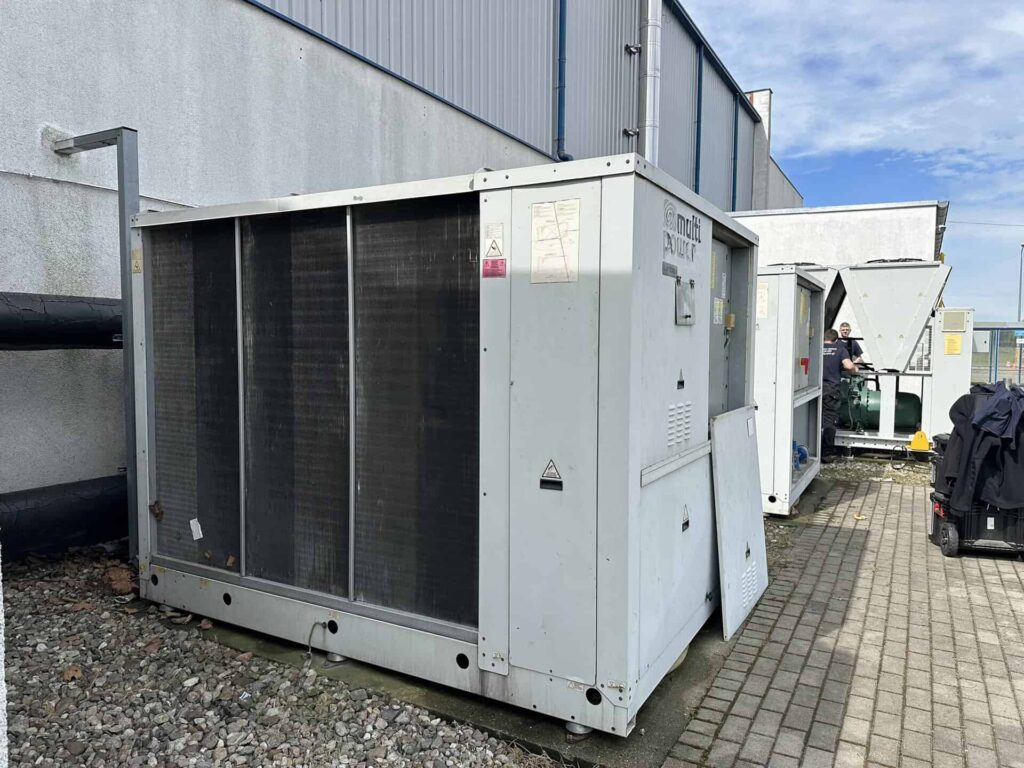
A condensing unit is a compact package with a compressor, an air-cooled condenser, a receiver and the safety devices. It feeds one or more evaporators in cold rooms, blast freezers or process applications through field pipework. Because the circuit is split between the unit outside and the evaporator inside, many faults blamed on the compressor actually start at the evaporator, at the expansion valve or in the pipework between them. Good condensing unit service therefore always covers the whole circuit, not only the box on the wall.
Typical installations we look after include chilled cold rooms at +2 to +4 °C, freezer rooms at -18 to -25 °C, dough retarders, cooled dispatch areas and small process coolers built with a remote condensing unit.
What we measure
A pressure reading alone says little. We compare saturated temperatures with the room and ambient temperatures and check the values below during every inspection or breakdown visit.
| Parameter | Typical value in a healthy circuit | What a deviation suggests |
|---|---|---|
| Evaporating temperature, chilled room at +2 °C | about -8 to -5 °C | Much lower: iced coil, fan fault, valve starving the coil |
| Evaporating temperature, freezer at -20 °C | about -30 to -27 °C | Higher: low charge, worn compressor valves, overload |
| Superheat at evaporator outlet | 5 to 8 K | Above 12 K: shortage of refrigerant or restriction; below 3 K: flood-back risk |
| Subcooling at condenser outlet | 3 to 8 K | Close to 0 K: low charge; above 12 K: overcharge or non-condensables |
| Condensing temperature above ambient | 10 to 15 K | Above 20 K: dirty coil, failed fan, air in the system |
| Compressor discharge temperature | below about 110 °C | Higher: high superheat, high compression ratio, oil breakdown risk |
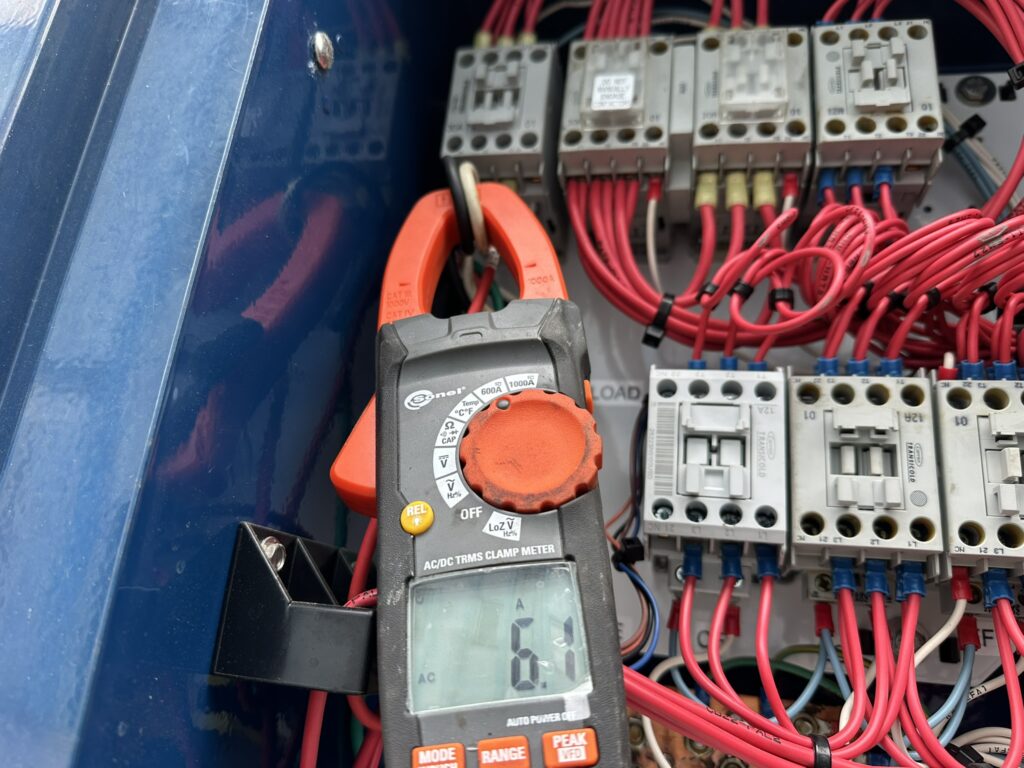
We also measure compressor and fan motor currents with a clamp meter, insulation resistance of the compressor windings and the voltage under load, because voltage drop on long supply cables is a frequent cause of tripping on start.
Typical faults and their causes
Compressor tripping on high pressure
In most cases the condenser coil is blocked with dust, leaves or poplar fluff, or one of the condenser fans has stopped. In summer a unit installed in a recess or under a roof overhang recirculates its own warm air. We clean the coil, check the fan speed controller and the high pressure switch setting, and look at the installation for air recirculation.
Room temperature rising, coil covered with ice
Defrost not working: a failed heater element, a faulty defrost termination sensor, a wrong defrost interval or a frozen drain line. In freezer rooms the drain line heater and the door frame heater are checked as well, because one blocked drain refreezes the drip tray within days.
Short cycling
Low pressure switch differential set too narrow, a solenoid valve that does not close tightly, or a unit oversized for the room. Short cycling shortens compressor life and causes poor oil return.
Oil problems and noisy compressor
Long suction lines without proper slope or oil traps, a failed crankcase heater or repeated liquid flood-back after defrost. We check oil level where a sight glass is fitted and the temperature of the crankcase before start.
Scope of a planned inspection
- Leak check of the unit, the pipework and the evaporators, with records in the equipment log.
- Pressures, superheat and subcooling measured under stable load.
- Cleaning of the condenser coil and inspection of the evaporator coil and drip tray.
- Test of high and low pressure switches and of the controller alarms.
- Electrical checks: terminals, contactors, currents, insulation resistance.
- Defrost test with a check of heaters and termination.
- Calibration check of room temperature sensors against a reference thermometer.
Refrigerants and leak check intervals
Many condensing units still run on R404A, which has a GWP of 3922. Under Regulation (EU) 2024/573 a charge of 10 kg of R404A equals 39.2 t CO2 equivalent and requires a leak check every 12 months, while 15 kg (58.8 t) already means every 6 months. Units on R449A (GWP 1397) or R452A (GWP 2140) with the same charge fall into lower bands. Servicing with high-GWP refrigerants is being restricted step by step, so for an older R404A unit we prepare a comparison: retrofit to a lower-GWP blend with a new expansion valve setting and oil check, or replacement of the unit.
When the unit is part of a larger plant, we include it in the inspection plan of the site. See planned maintenance for schedules and records, and controls and remote monitoring for temperature alarms sent by SMS or e-mail. Larger chilled water units are covered on the chiller service page.
Questions from maintenance teams
How often should a cold room condensing unit be serviced?
At least once a year, plus a coil clean before summer if the unit stands near trees or a dusty yard. The legal leak check interval depends on the charge in t CO2 equivalent and can be shorter.
Is adding refrigerant without finding the leak acceptable?
No. The regulation requires the leak to be found and repaired, and a recheck after the repair. Topping up only hides the fault until the next warm week.
Can you work on units in a shop during opening hours?
Yes, most work is done from the outside unit and the evaporator, and we agree with the store manager when the room can be emptied for defrost tests or coil repairs.
Do you replace compressors on site?
Yes. After a compressor burnout we also check the oil for acid, replace the filter drier and evacuate the circuit properly, otherwise the new compressor fails in the same way.
Do you service units of any brand?
Yes. As an independent company we service condensing units and evaporators regardless of the manufacturer, once the warranty has ended.
Cold room too warm?
Send us the unit nameplate and the room temperature log, and we will plan the visit with the right parts on board.