
Food and beverage cooling
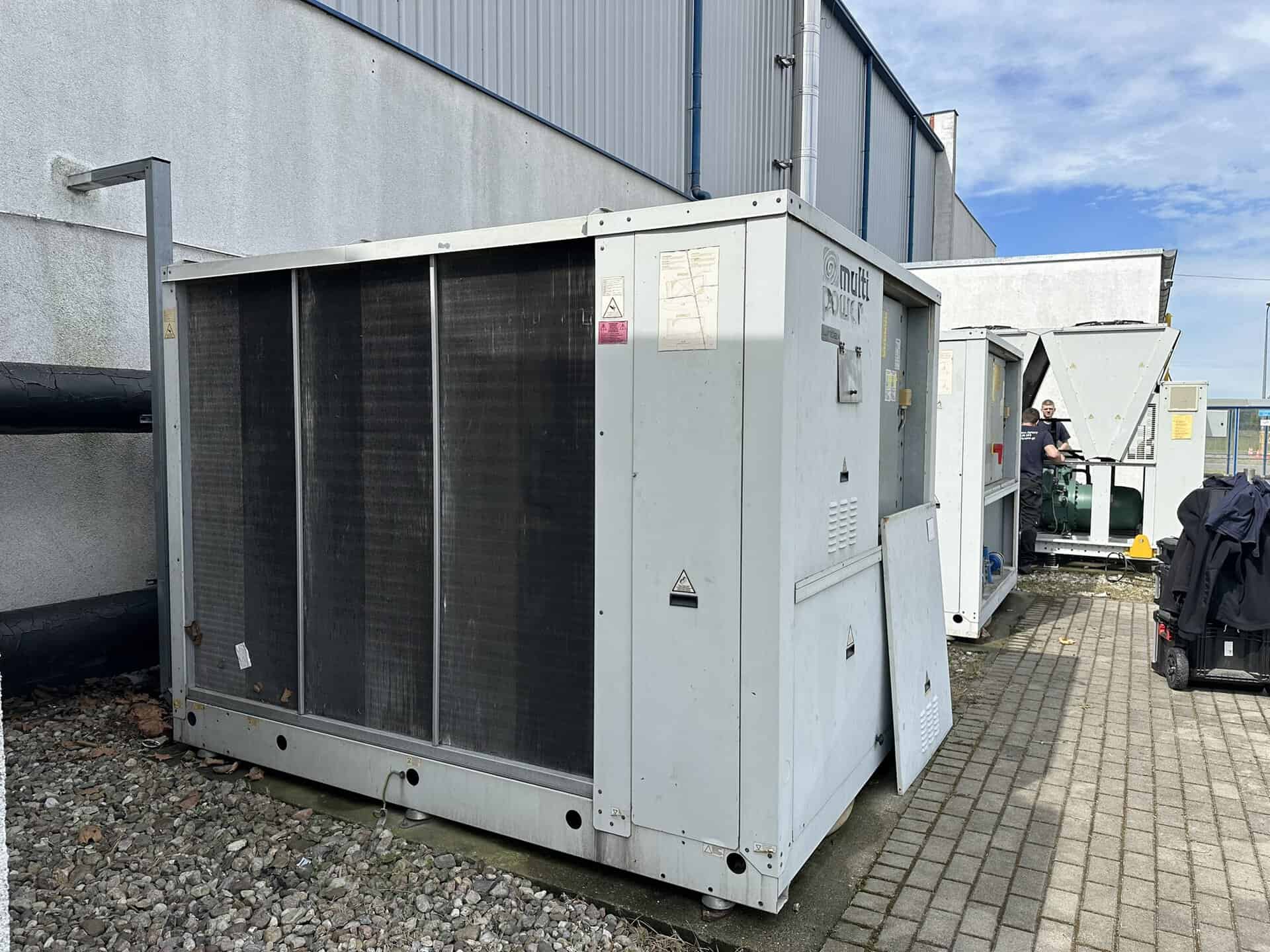
Food plants and breweries depend on glycol, ice water and cold rooms that hold temperature day and night and leave a clear record for HACCP. SKiC services, repairs and modernises this equipment, including refrigerant changes required by the F-gas rules.
F-gas company certificate. A report with measurements after every visit. Mobile service in Poland and the EU.
Cooling needs in food and beverage production
The food industry uses cooling at almost every step: cooling product after heat treatment, controlling fermentation, storing raw materials and finished goods, and keeping production rooms within hygiene limits. Temperatures are set by the product and by food safety plans, and deviations must be documented.
| Process | Typical temperature | Equipment |
|---|---|---|
| Milk cooling after reception | Product to 4 °C with ice water at 0.5 to 1 °C | Ice bank or ice water chiller, plate cooler |
| Wort cooling | From about 95 °C to pitching temperature | Plate cooler with cold water and glycol stage |
| Fermentation, lager | 8 to 12 °C in tank, glycol at minus 4 to minus 6 °C | Glycol chiller, tank jackets |
| Crash cooling and lagering | 0 to minus 1 °C | Glycol chiller |
| Dough water in bakeries | 2 to 4 °C | Water chiller |
| Chilled storage | 0 to 4 °C | Condensing units, cold rooms |
| Frozen storage | minus 18 to minus 25 °C | Low temperature condensing units |
| Production rooms | 8 to 12 °C, for example meat cutting | Air coolers, AHUs |
Load profile
Food plants have sharp peaks: a brewery crash cools several tanks at once, a dairy receives milk in the morning, a meat plant brings warm product into chillers after slaughter. Ice banks and glycol buffer tanks store cold produced during low load, so the plant does not need a chiller sized for the peak.
Hygiene and documentation
- Where incidental contact with product is possible, food grade propylene glycol is used instead of ethylene glycol.
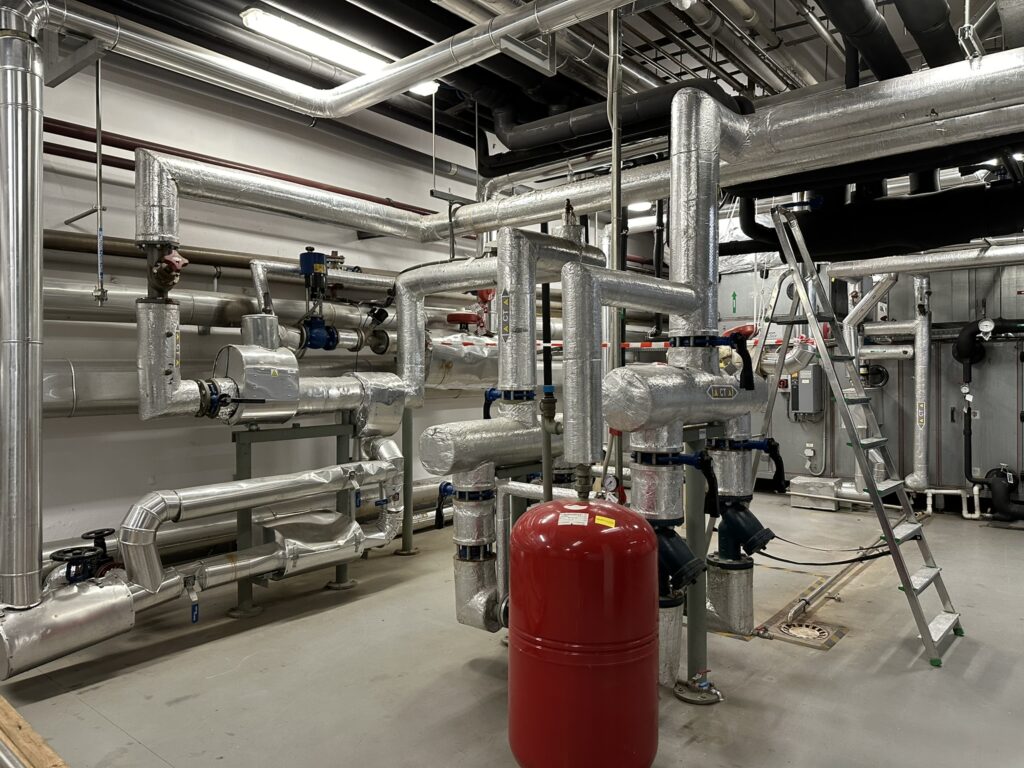
- Pipework in production rooms is stainless steel with cleanable insulation and no dirt traps.
- Cleaning chemicals and chlorinated water attack aluminium fins and copper. Evaporator coils in wash-down areas need coated fins or stainless steel housings and regular inspection.
- Temperature records for HACCP must be continuous. We check that sensors are correct and that alarms reach a person, not only a display.
- Condensate drains from air coolers must run freely and be heated in freezers, otherwise ice and standing water become a hygiene problem.
F-gas rules and refrigerant changes
Many cold rooms and condensing units still run on R404A (GWP 3922) or R507A (GWP 3985). Under Regulation (EU) 2024/573, systems with a charge of 40 t CO2 eq. or more, which for R404A means about 10.2 kg, may no longer be topped up with virgin refrigerant of GWP 2500 or above, only with reclaimed or recycled gas. Each leak therefore becomes more expensive and harder to fix. A common step is a retrofit to R449A (GWP 1397) or R452A (GWP 2140), with new expansion valve settings and often new oil, or replacement with a unit on a low GWP refrigerant.
Leak check intervals depend on the CO2 equivalent: 20 kg of R404A is 78.4 t CO2 eq. and needs a check every 6 months, or every 12 months with a leak detection system. We carry out the checks and the record entries during routine visits, see mobile condensing unit service.
Typical failures and their impact
- Iced evaporators in cold rooms after defrost faults, leading to rising room temperature and product at risk.
- Glycol chiller tripping on low pressure during crash cooling, because the glycol concentration is too low for the required temperature or the strainer is blocked with sediment.
- Refrigerant leaks on vibrating lines and corroded coils, with repeated alarms and a top-up that is no longer legal with virgin R404A.
- Ice bank not building enough ice overnight because of a fouled condenser or a slow leak, so morning milk cools too slowly.
- Door heaters, drain heaters and fans failing in freezers, causing ice build-up and damaged doors.
The consequences range from lost batches and rejected deliveries to questions during audits by retailers and authorities.
How SKiC supports food and beverage plants
- Diagnostics with measurements on glycol chillers, ice water systems and condensing units, with temperature logging where a problem is intermittent.
- Repairs on site: compressors, valves, fans, defrost systems, controllers and sensors.
- Hygienic installations in stainless steel and press fittings, with glycol distribution to tanks and process coolers.
- Refrigerant retrofits and replacement of old condensing units, planned outside the season peaks.
- Planned maintenance before the summer and before peak production periods, see planned maintenance.
If a cold store is needed during a renovation, a refrigerated container used as a stationary cold store is an option, see refrigerated container service.
Questions from maintenance teams
Which glycol concentration does a brewery need?
With glycol supplied at minus 5 °C, a propylene glycol concentration of about 30 to 35 percent gives a freezing point around minus 13 to minus 17 °C, which leaves a safe margin below the evaporating temperature. We measure it before every season.
Our R404A cold room loses gas every year. Repair or replace?
We first find and repair the leak. If the unit is older and the charge is above 40 t CO2 eq., we compare the cost of a retrofit to R449A or R452A with a new unit and show both options.
Can you provide temperature records for an audit?
Our reports include measured temperatures and sensor comparisons. Continuous records come from your monitoring system; we can add data logging and alarms to a Siemens PLC or web visualisation.
Do you clean evaporators in production rooms?
Yes, with cleaning agents suitable for food areas, coordinated with your hygiene team and production schedule.
Protect your product with reliable cooling
Send us the list of chillers and cold rooms with their refrigerants, and we will plan inspections, leak checks and the repairs that are needed.