F-Gas Leak Checks: What Chiller Operators Must Know Under Regulation (EU) 2024/573
Every operator of a chiller, refrigeration plant or heat pump containing fluorinated refrigerants has legal obligations, and they do not disappear when the maintenance is outsourced. Since March 2024 the rules are set by the F-gas Regulation (EU) 2024/573, which replaced Regulation 517/2014. The core idea is the same: prevent leaks, find them early, repair them quickly and document everything. This article explains in plain terms what operators of industrial chillers have to do, how the leak check interval is determined and what an inspector will ask to see.
Who is the operator?
The operator is the natural or legal person that has actual control over the technical functioning of the equipment. In most cases this is the company that owns and runs the chiller, not the service contractor. The operator is responsible for having leak checks performed on time, for repairing leaks and for keeping records. The work itself must be done by certified personnel and companies.
How the leak check interval is calculated
The interval depends on the quantity of refrigerant expressed in tonnes of CO₂ equivalent, not in kilograms. Multiply the charge in kg by the global warming potential (GWP) of the refrigerant and divide by 1,000.
Example: Regulation 2024/573 uses updated GWP values, for instance 1,530 for R134a and about 2,256 for R410A. A chiller with 60 kg of R134a therefore contains 60 × 1,530 / 1,000 = 91.8 t CO₂ equivalent, a chiller with 60 kg of R410A about 135 t. Older documents often show lower values calculated under the previous regulation, so recalculate before planning the intervals.
| Charge in t CO₂ equivalent | Leak check without leak detection system | Leak check with leak detection system |
|---|---|---|
| 5 to below 50 | at least every 12 months | at least every 24 months |
| 50 to below 500 | at least every 6 months | at least every 12 months |
| 500 and more | at least every 3 months | at least every 6 months; a leak detection system is mandatory |
Hermetically sealed equipment labelled as such with less than 10 t CO₂ equivalent is exempt from periodic leak checks. Always check the nameplate and the documentation, because the quantity on the nameplate is the factory charge and may differ from the actual charge after installation.
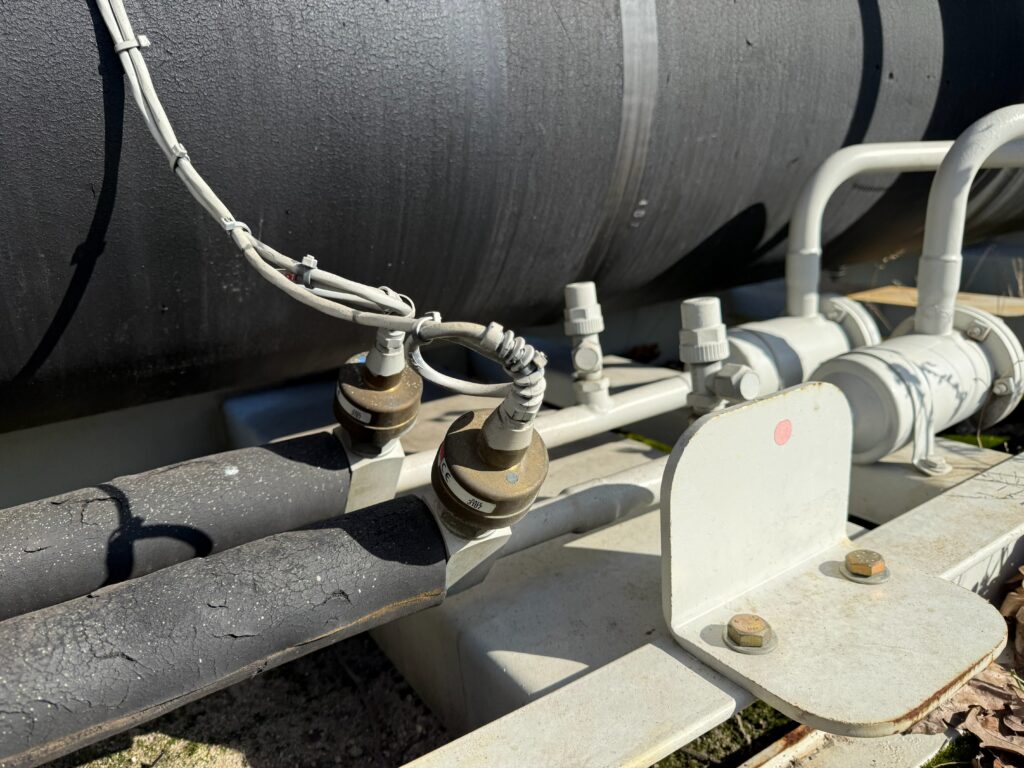
What happens during a leak check
- Review of the equipment records and previous refrigerant additions.
- Visual inspection of joints, valves, flexible lines, vibration points and oil traces.
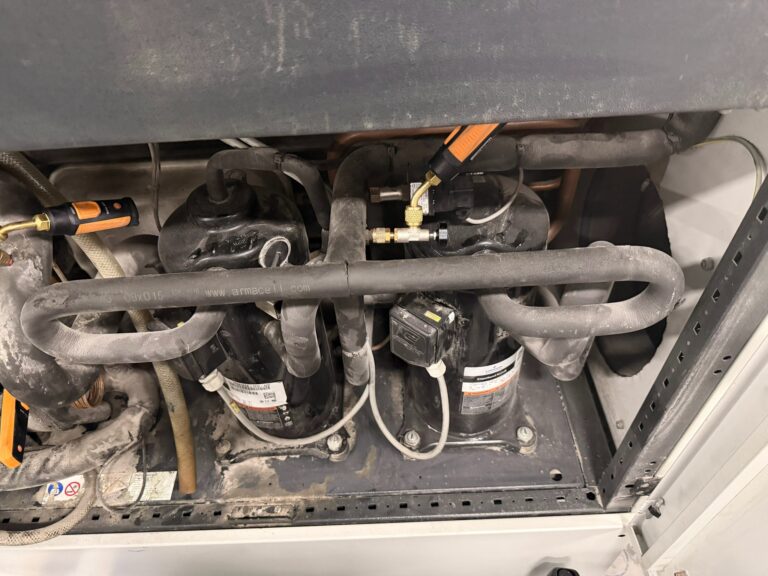
- Check with an electronic leak detector or bubble solution at the typical leak points.
- Evaluation of operating parameters that indicate refrigerant loss, such as subcooling, superheat and pressures.
- Entry in the records with date, result and the name and certificate of the technician.
If a leak is found, it must be repaired without undue delay, and a follow-up check must confirm the repair within one month.
Records the operator must keep
- Quantity and type of refrigerant in the equipment.
- Quantities added and recovered during service, maintenance and disposal.
- Dates and results of leak checks and repairs.
- Identification of the company and technician who performed the work, with certificate numbers.
- For refrigerant from reclamation or recycling: its origin and the relevant information.
Records must be kept for at least five years. In practice inspectors start with these records. Missing entries or overdue checks are the most common findings, even when the equipment itself is in good condition.
Refrigerants with high GWP
The regulation tightens the restrictions on refrigerants with a high GWP step by step. For older units running on refrigerants such as R404A or R507A, servicing and refilling are already restricted, and the room for manoeuvre will shrink further. If your chiller uses a high GWP refrigerant, a leak is not only an environmental and cost problem but can also raise the question of whether a repair is still worthwhile. Plan the replacement or conversion before a major failure forces the decision.
Practical tips for operators
- Keep a list of all equipment with refrigerant type, charge and t CO₂ equivalent.
- Combine leak checks with planned maintenance so only one visit is needed.
- Ask your contractor for the records after every visit, not only once a year.
- Investigate any repeated refrigerant top-up. A chiller that needs refrigerant every season has a leak, even if nobody found it yet.
We carry out leak checks, repairs and documentation as part of our planned maintenance and chiller service and repair, and we offer full refrigeration system audits.
Costs
Leak checks are charged by time: 115 EUR net per hour plus travel at 0.75 EUR net per km, usually combined with maintenance. Searching for a leak that has not been located yet, with pressure testing and repair recommendations, is offered as diagnostics from 800 EUR net.
Frequently asked questions
Do the leak check rules apply to every chiller?
Can our own maintenance staff do the leak check?
What does a leak detection system change?
Where can I see the charge of my chiller?
Not sure whether your leak checks and records are up to date? Send us a list of your equipment with refrigerant type and charge through the contact form or to info@skic.com.pl, and we will tell you which intervals apply.