
Chiller rental
Rental chillers and cooling units, supplied with our partner ChillerTech and connected, started and serviced by SKiC. For breakdowns, overhauls of your own unit and seasonal peaks in demand.
F-gas company certificate. A report with measurements after every visit. Mobile service in Poland and the EU.
Production does not wait for a compressor delivery. When a chiller fails and the repair needs weeks, or when a planned overhaul takes the main unit off line, a rental unit keeps the process running. Rental also makes sense for seasonal peaks, test runs of new lines and temporary sites. ChillerTech supplies the units, SKiC takes care of the technical side: connection, start-up and service during the rental period.
When rental makes sense
| Situation | Typical rental period | What to prepare |
|---|---|---|
| Breakdown of your chiller, repair needs parts with long lead time | Days to several weeks | Connection points, power supply, location for the unit |
| Planned overhaul or replacement of the main unit | Duration of the works plus start-up of the new unit | Plan of the changeover, valves for temporary connection |
| Seasonal peak, for example summer production | Weeks to months | Load estimate, ambient conditions at the location |
| Test run of a new production line | Duration of the trials | Required temperatures and fluid |
| Temporary building cooling, events, renovation | Short or long term | Comfort load, noise limits |
Process and comfort cooling
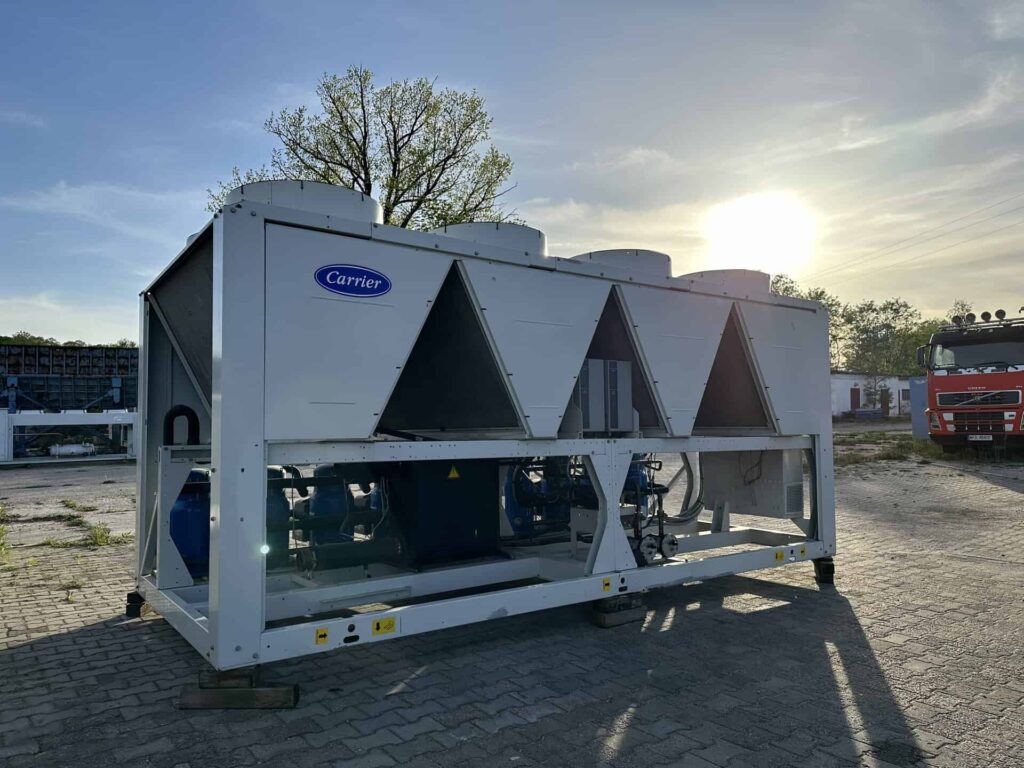
Process applications usually need stable supply temperatures and sometimes glycol for lower temperatures or frost protection. Comfort cooling usually works at 7/12 °C with water, connected to an existing air handling unit or fan coil circuit. The unit offered depends on the capacity, temperature, fluid and current availability at ChillerTech; we confirm it in the offer.
Glycol and low temperatures
If your process runs below about 5 °C supply, or the unit stands outside in winter, the circuit needs glycol. A 30 % ethylene glycol mixture protects down to roughly minus 15 °C but reduces the capacity of the unit and increases the pressure drop in the pipework. We take this into account when matching the rental unit, and we check the concentration with a refractometer before start-up, because mixing rental glycol with the water of your system can dilute it below a safe level.
Air-cooled units and their location
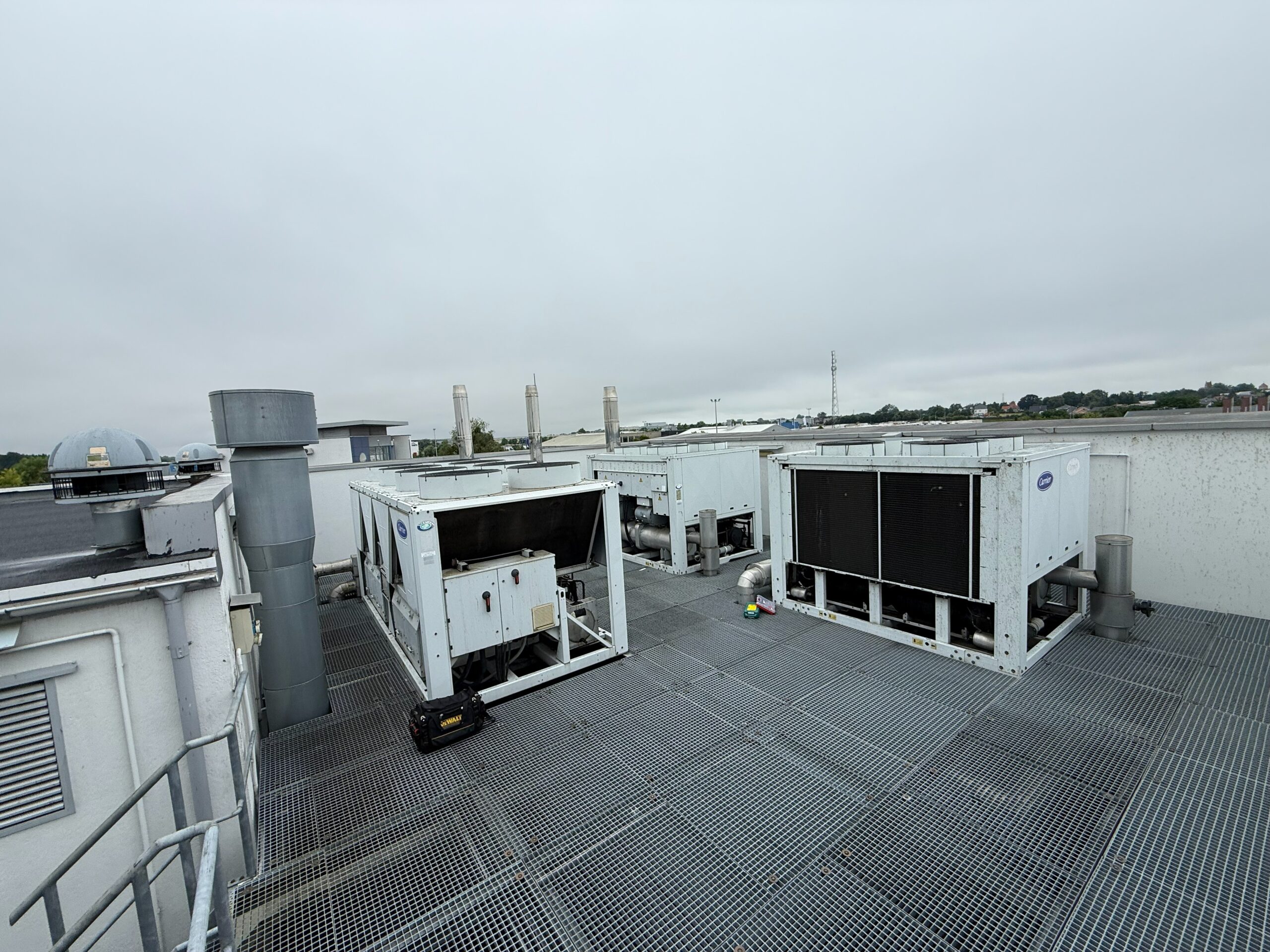
Rental chillers are almost always air-cooled. They need free air around the condenser and must not draw in their own discharge air, which is a common problem when a unit is squeezed between a wall and a container. In hot weather, recirculation of a few kelvin is enough to cause high pressure trips. We check the location before delivery.
Information we need for an offer
- Required cooling capacity, or the nameplate of the unit to be replaced.
- Supply and return temperatures and the fluid (water or glycol, concentration).
- Available electrical supply: voltage, protection and distance to the unit location.
- Location: ground or roof, access for delivery and crane, distance to the connection points.
- Expected rental period and the date from which cooling is needed.
Connection and start-up
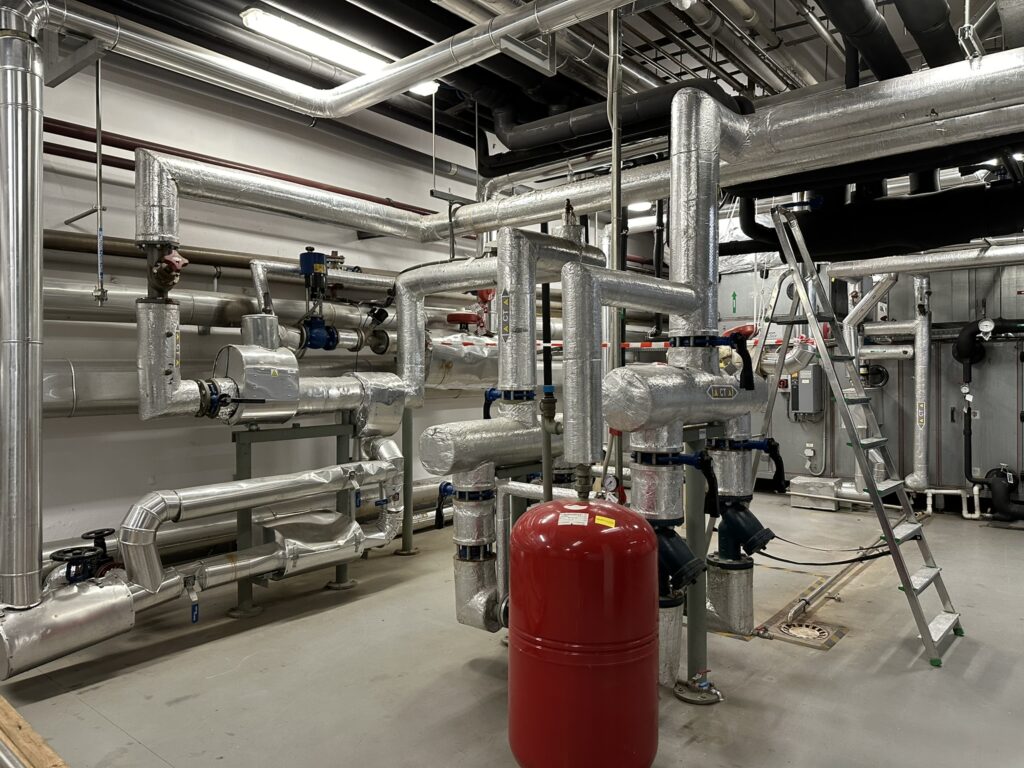
The fastest connection is one prepared in advance. In plants where a long stop would be costly, we recommend fitting valved tees with quick couplings on the chilled water pipework during planned maintenance, so that a rental unit can be connected in hours, not days. Our teams make the temporary connection with flexible hoses or rigid pipework, depending on the pressure and the period. We check the flow, vent the circuit, set the controller to your temperatures and record the readings at start-up.
- Site survey or review of photos and drawings.
- Delivery and positioning of the unit.
- Hydraulic and electrical connection.
- Filling, venting and flow check.
- Start-up, setting of temperatures and alarms, report.
Short and long term
For short rentals the priority is speed and a simple connection. For long rentals we look more carefully at efficiency and noise, because energy costs over several months can exceed the rental fee. If the rental runs for long, it is worth considering whether the right answer is a purchase of a new or refurbished unit; see chiller selection and supply.
Service during the rental
During the rental period SKiC handles the service of the unit: periodic checks of temperatures, pressures and the condition of the condenser, cleaning where needed and response to alarms within normal working hours. If the rental unit can send alarms by e-mail or SMS, we configure them so that your maintenance team knows about a problem before production does. Meanwhile we can repair your own unit, on site or in our workshop, see chiller service and repair.
Questions from maintenance teams
How quickly can a rental unit be on site?
It depends on the capacity needed, the location and current availability. We give you a realistic date in the offer.
Do we need to prepare anything?
A location with access for delivery, a power supply and connection points on the pipework. We will tell you exactly what after the survey.
Can the rental unit work with glycol?
Yes, if specified in advance. Glycol concentration affects capacity, so we take it into account in the selection.
Who is responsible for the unit during the rental?
The terms are set out in the rental agreement. SKiC provides connection, start-up and service according to the agreed scope.
Can we buy the unit after the rental?
Ask ChillerTech through us; this is possible for some units and is agreed individually.
Need temporary cooling?
Send us the capacity, temperatures and site details, and we will check availability with ChillerTech.