
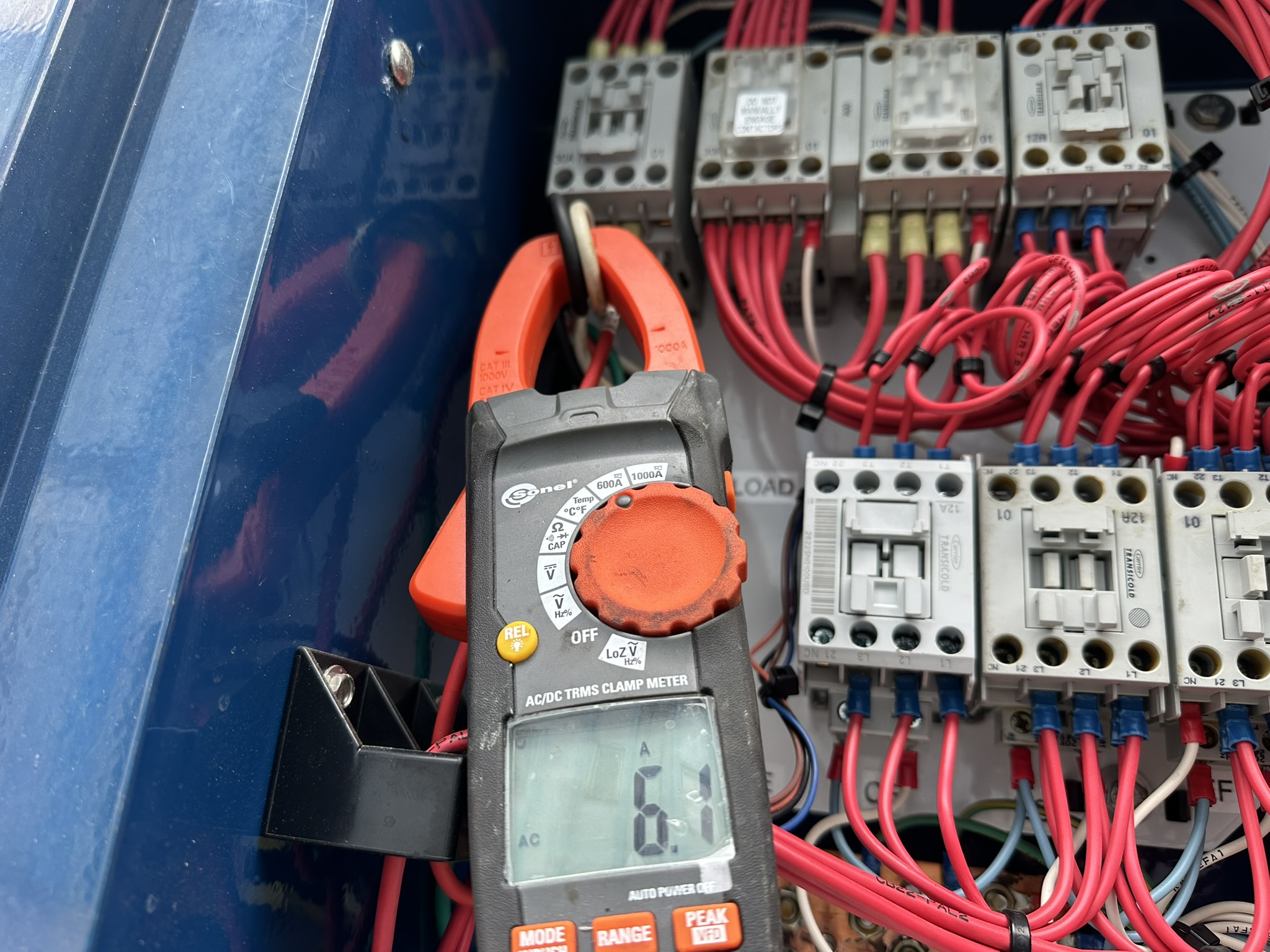
Our repairs
Examples of repairs carried out by SKiC technicians, each described as fault, cause and solution. They show how we work: we find the cause with measurements before we replace parts.
F-gas company certificate. A report with measurements after every visit. Mobile service in Poland and the EU.
A replaced part that fails again after a month is the most expensive repair a maintenance department can buy. That is why every case below starts with the question “why did it happen”, not “what do we replace”. Client names are not published, the technical details are typical of the faults we meet on chillers, rooftops, air handling units and process coolers.
Repairs at a glance
| Fault | Cause found | Solution |
|---|---|---|
| Scroll compressor seized | Liquid floodback after expansion valve failure | Compressor replaced, valve replaced, superheat set, circuit evacuated and dried |
| Repeated high pressure trips in summer | Fouled condenser coil and one fan motor running slow | Coil cleaned, fan motor replaced, condensing pressure checked under load |
| Gradual loss of capacity | Slow leak at a brazed joint, low charge | Leak located, joint re-brazed, pressure test, vacuum, recharge by weight |
| Flow switch alarms | Blocked strainer and air in the water circuit | Strainer cleaned, system vented, flow verified across the evaporator |
| Unit stops at random | Loose terminal and drifting sensor | Terminals re-tightened, sensor replaced, controller history reviewed |
| Burst heating coil in AHU | Frost protection failed on a cold night | Coil repaired or replaced, frost thermostat and valve logic checked |
| Oil cooler alarm on a machine tool | Condenser clogged with oil mist and dust | Cleaning, refrigerant check, filter mat added on the air inlet |
Compressor failures
Seized scroll compressor after floodback
The chiller reported a compressor protection fault and the compressor would not start. Before ordering a new one we checked the rest of the circuit, because a scroll compressor rarely fails on its own. The electronic expansion valve had been sticking open, so liquid refrigerant returned to the compressor at low load and washed oil from the scrolls. Replacing only the compressor would have destroyed the new one too. We replaced the compressor and the valve, fitted a new filter drier, carried out a pressure test with nitrogen, evacuated the circuit to a deep vacuum and charged by weight. After start-up we set the superheat and logged suction and discharge readings at several load steps.
Burnt-out motor winding
When a compressor motor burns out, acids form in the oil. In such cases we test the oil, fit a burnout filter drier on the suction line and change the filter driers again after a period of operation. The report states the acid test result, so the maintenance team knows why a second visit is needed.
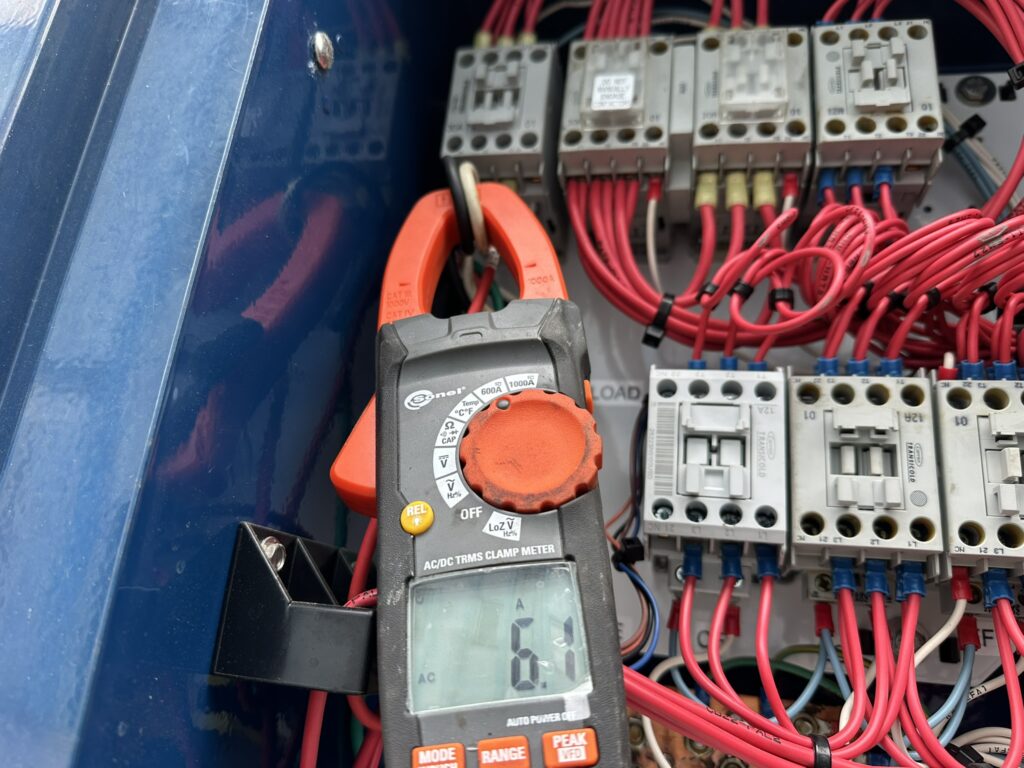
Leaks
Capacity dropping week by week
Operators noticed that the chiller needed more time to reach the setpoint. Readings showed low subcooling and high superheat, a typical picture of an undercharged circuit. An electronic leak detector and bubble test located the leak at a brazed joint near a vibrating capillary line. We recovered the remaining refrigerant, re-brazed the joint, secured the line against vibration, carried out a pressure test and recharged the unit. Under Regulation (EU) 2024/573 a repaired leak must be followed by a check within one month, which we scheduled at the same time.
Typical leak points we find on chillers:
- Brazed joints exposed to vibration from compressors and fans.
- Schrader valves and access fittings without caps.
- Flare connections on sensors and pressure switches.
- Corroded condenser coils near coastal or chemical environments.
Control faults
Random stops without a clear alarm
A chiller stopped several times a week and restarted on its own. The alarm history showed short sensor faults that appeared and disappeared. Thermal imaging of the control panel revealed a warm terminal, and a sensor showed readings that jumped by several kelvin. Both were fixed, and we added the panel check to the planned maintenance list. Where the original controller is obsolete, we can replace it with a new panel, see controls and remote monitoring.
Frost damage
Burst water heating coil
A cold night, a failed frost thermostat and a heating valve that did not open in time: the result was a burst coil in an air handling unit. We repaired the coil in the workshop (where the damage allowed it) and, more importantly, tested the frost protection chain: thermostat, valve actuator, pump and the controller logic. Details on the water heating coil repair page.
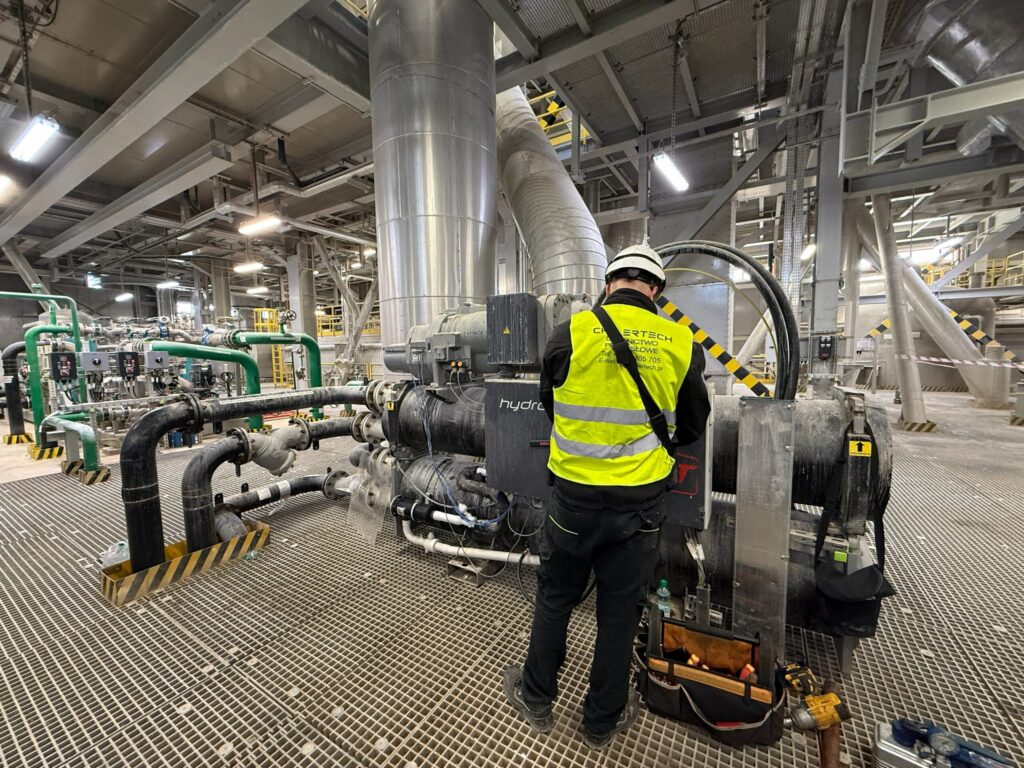
What you get after a repair
- A description of the fault and of the cause we found.
- The list of parts replaced and work done.
- Readings before and after the repair.
- Recommendations to prevent the fault from returning.
This documentation also supports your F-gas records. Repairs that need a workshop are carried out at our base in Wałsnów. For regular care that prevents many of these faults, see planned maintenance.
Questions from maintenance teams
Do you replace the compressor straight away?
No. We first find out why it failed, because the same cause would damage the new compressor.
Can you repair coils and heat exchangers?
Many coils can be repaired, depending on the extent of damage. Where repair is not economical we propose a replacement.
Do you leave a written report?
Yes, after every visit, with the readings and the work done.
How fast can you come?
It depends on the location and our schedule. We give you a realistic date when you send the enquiry. We do not offer round-the-clock standby.
A fault you cannot explain?
Send us the alarm list and a short description, and we will plan a diagnostic visit with measurements.