
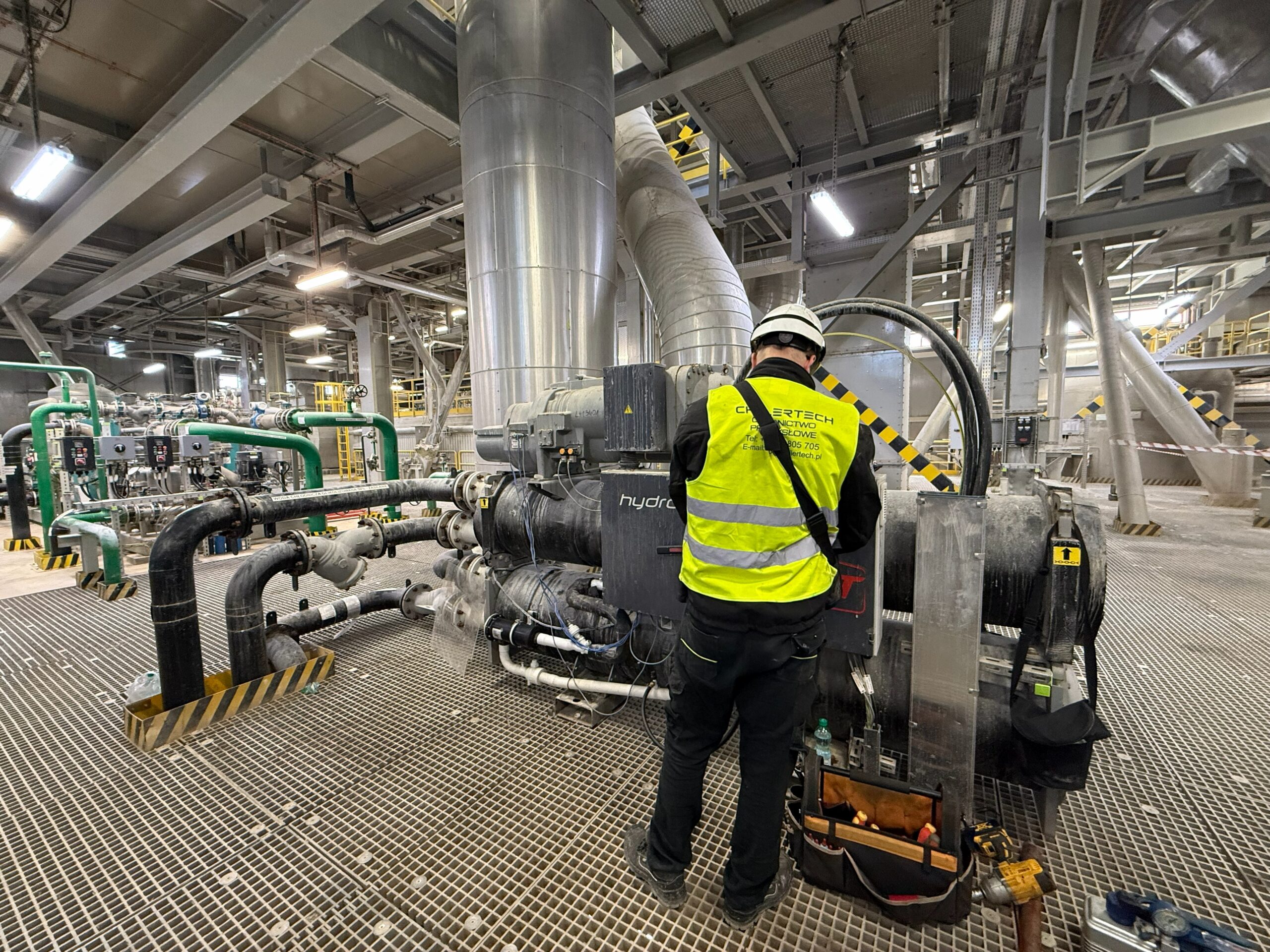
Retail and logistics cooling
Retail parks, warehouses and logistics centres run many rooftops, air handling units and condensing units across many sites. SKiC services and repairs this equipment and organises planned maintenance with a clear report per unit.
F-gas company certificate. A report with measurements after every visit. Mobile service in Poland and the EU.
Cooling and HVAC needs in retail and logistics
Large halls have a different problem from process plants: the individual unit is rarely critical, but there are many of them, often on several sites, and nobody on site knows them in detail. The result is that faults are discovered by complaints from staff or customers, and maintenance is reduced to filter changes. A structured approach saves energy and avoids repairs during the hottest week of the year.
| Area | Typical requirement | Equipment |
|---|---|---|
| Sales floor in retail parks | Air 20 to 26 °C, fresh air for occupancy | Rooftop units, AHUs |
| Ambient warehouse for medicines | 15 to 25 °C, mapped and monitored | Rooftops, AHUs, heating and cooling |
| Chilled warehouse | 2 to 8 °C | Condensing units, air coolers, chillers on glycol |
| Frozen storage | minus 18 to minus 25 °C | Low temperature condensing units |
| Loading docks and picking areas | Limited temperature rise at the doors | Air curtains, AHUs |
| Offices and server rooms in the hall | 20 to 24 °C | AHUs, precision units |
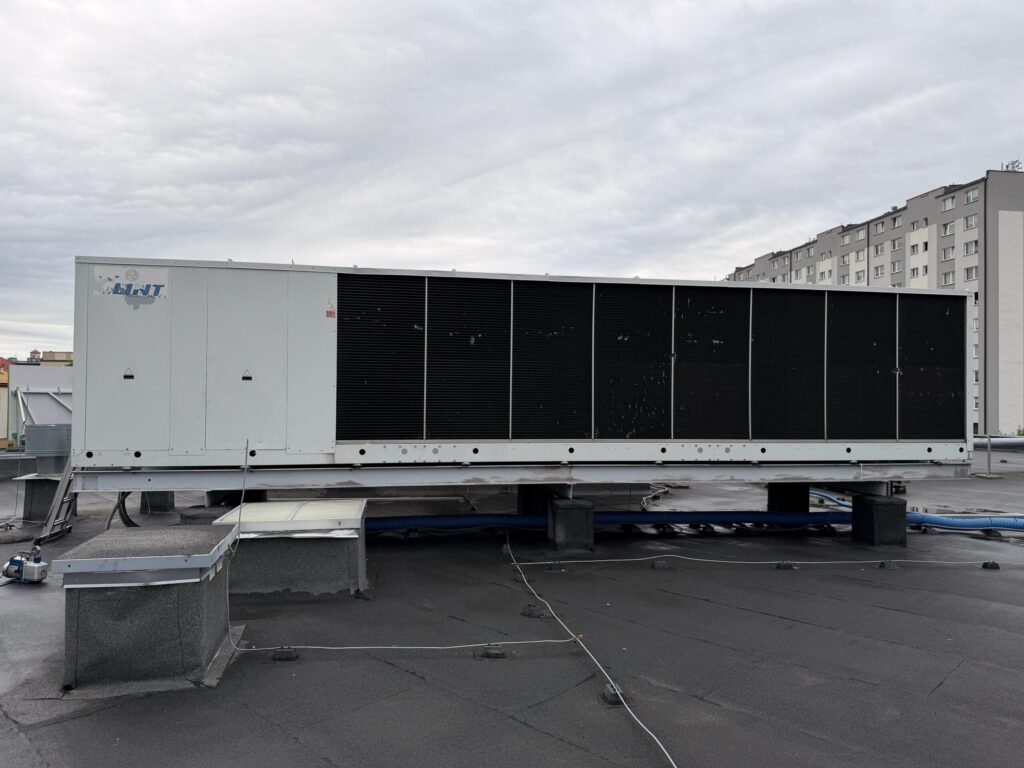
Rooftop units and air handling units
Rooftops from Lennox, Carrier, Trane and other manufacturers combine fresh air, cooling, heating and often heat recovery in one box on the roof. In a retail park they run for long hours and are exposed to weather, birds and roof dirt. The most frequent findings during our inspections are fouled condenser coils, blocked filters, worn belts or failed EC fans, damper actuators stuck in one position, economiser control that never uses free outside air, and sensors that read several kelvin wrong.
Air handling units in warehouses and logistics centres often have water coils. Frost damage to heating coils after a winter with a failed frost protection is a typical and expensive fault, see water heating coil repair and AHU and rooftop service.
Temperature-controlled storage
Warehouses storing medicines must keep the products within the labelled range, typically 15 to 25 °C or 2 to 8 °C, under good distribution practice. That means heating in winter and cooling in summer, temperature mapping, and alarms. We look at the HVAC chain behind the measured values: whether the units can hold the range in the warmest and coldest periods, and what happens if one unit fails.
Cold rooms and condensing units
Chilled and frozen areas in logistics centres use condensing units with air coolers, or larger central systems. Their failures directly affect goods: iced coils after defrost faults, door heater failures in freezers, leaks on long refrigerant lines and compressors damaged by short cycling. Many systems still run on R404A (GWP 3922), where virgin refrigerant can no longer be used for top-up above 40 t CO2 eq. A retrofit to R449A (GWP 1397) or a new unit is often the economic choice. More on mobile condensing unit service.
Planned maintenance across many sites
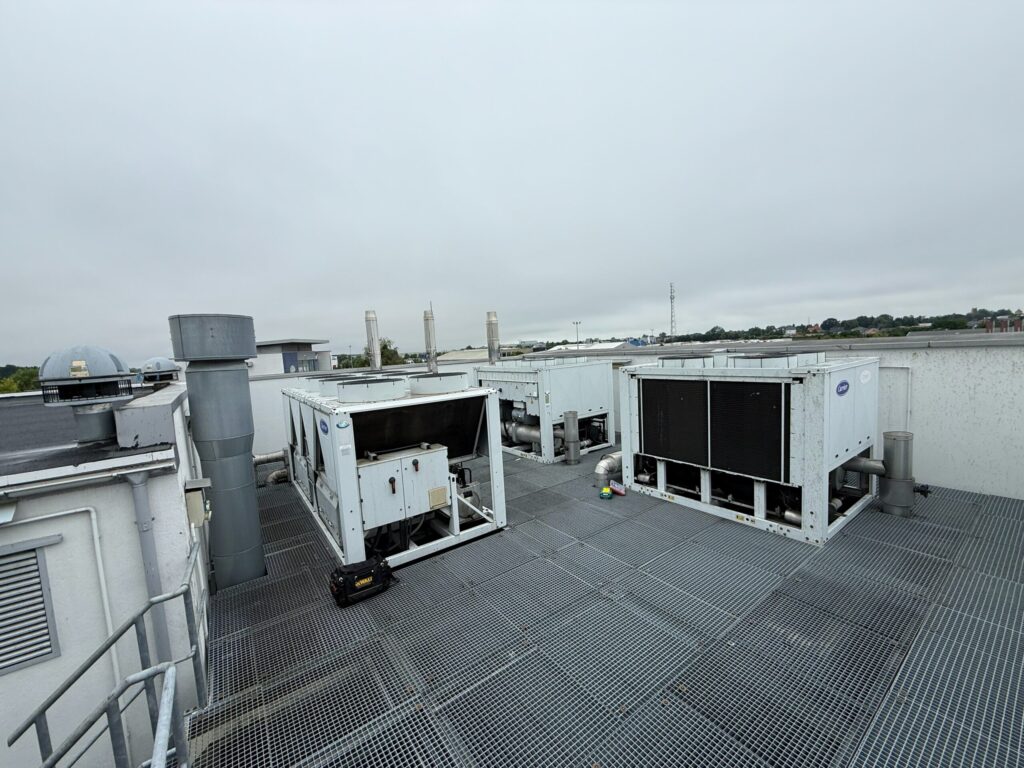
The biggest gain in this sector comes from organisation. We work with an asset list per site, plan visits by route so that several sites are covered in one trip, and leave a report per unit with the measured values, photos and a list of recommended repairs with priorities.
- Inventory: each unit with location, model, serial number, refrigerant and charge, and its CO2 equivalent.
- Leak check schedule under Regulation (EU) 2024/573: for example a rooftop with 18 kg of R410A has 37.6 t CO2 eq. and needs a check every 12 months, a condensing unit with 15 kg of R404A has 58.8 t CO2 eq. and needs one every 6 months.
- Spring inspection focused on cooling: coil cleaning, refrigerant circuit measurements, fans and controls.
- Autumn inspection focused on heating and frost protection: coils, valves, frost thermostats, dampers.
- A summary per site with costs of recommended work, so the facility manager can budget.
Typical failures and their impact
- Rooftop high pressure trips on hot afternoons, leaving the sales floor too warm on the busiest days.
- Fresh air dampers stuck closed, causing poor air quality and complaints.
- Frost damaged coils in AHUs, with water damage in the hall and the unit out of service for weeks.
- Cold room alarms after evaporator icing, with goods to be moved or written off.
- Gradual refrigerant leaks, noticed only when capacity is gone.
Questions from maintenance teams
Can you take over maintenance of rooftops from different manufacturers?
Yes. We service rooftops and AHUs of all major brands, independently and after the warranty period, and keep one reporting format for all of them.
How many visits per year does a rooftop need?
Two: a spring inspection for cooling and an autumn inspection for heating and frost protection. Filters may need changing more often, depending on the site.
Do you cover sites outside Poland?
Yes, with mobile teams in the EU. Outside Poland, diagnostics on site start from 800 EUR net, labour is 115 EUR net per hour and travel is 0.75 EUR net per km; planned visits to several sites are combined to share travel costs.
Can you add remote alarms to our units?
Yes. We connect unit alarms and key temperatures to a Siemens PLC or a web visualisation with SMS or e-mail notifications.
Put all your sites on one maintenance plan
Send us the list of sites and units, and we will propose an inventory, a leak check schedule and a planned maintenance programme.