
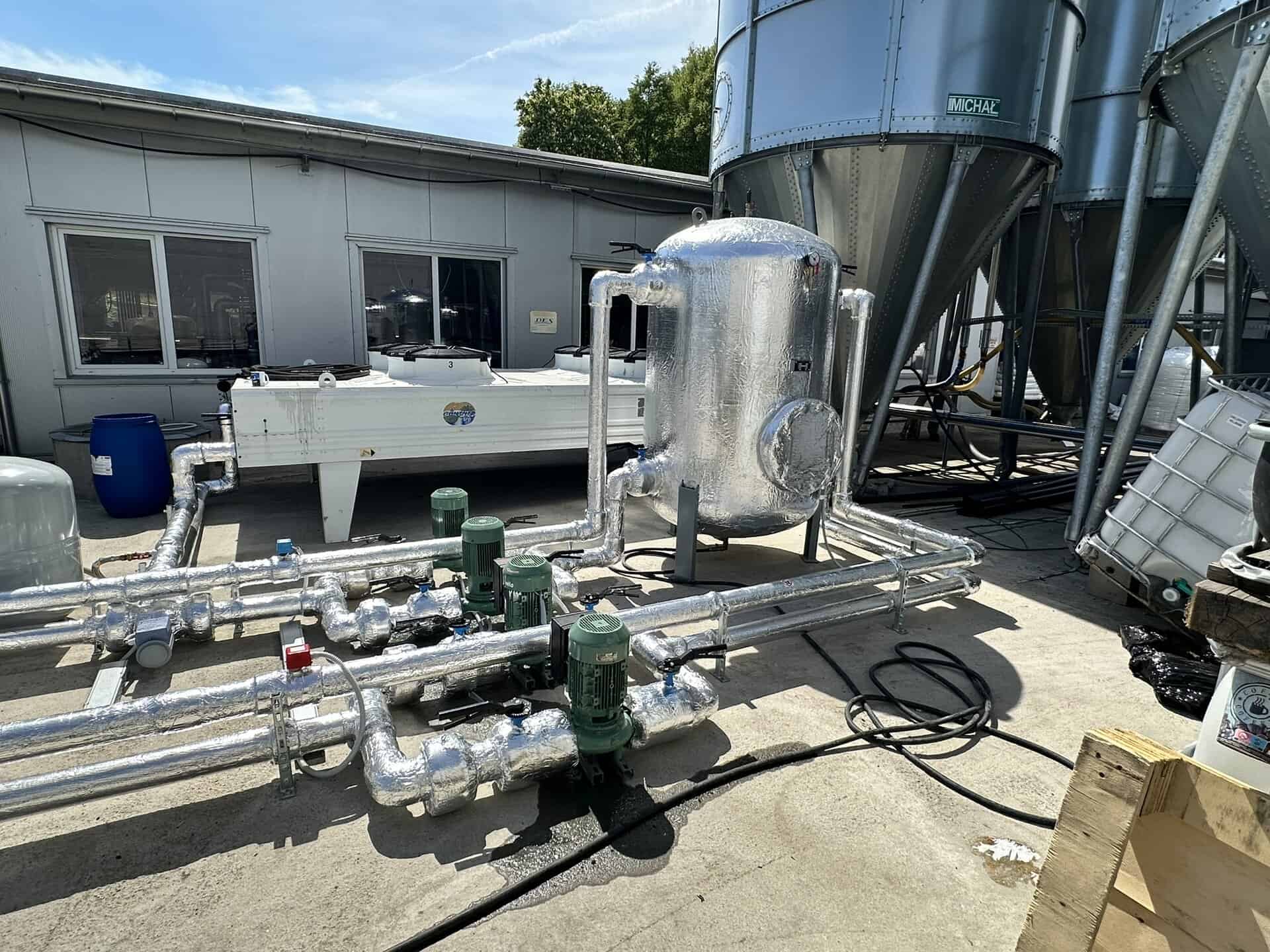
Pharmaceutical and medical cooling
Pharmaceutical production, laboratories and medical equipment need cooling that is redundant, documented and changed only under control. SKiC services the chillers, precision air conditioning and process cooling, and leaves a report with measurements after every visit.
F-gas company certificate. A report with measurements after every visit. Mobile service in Poland and the EU.
Cooling needs in pharmaceutical and medical facilities
In a pharmaceutical plant the cooling system supports a validated process. A temperature excursion in a cleanroom, a reactor or a storage area may lead to a deviation report, an investigation and a batch on hold. In hospitals and diagnostic centres the cooling supports equipment that patients are waiting for. In both cases the questions are the same: what happens when one component fails, and can you prove what was done to the system.
| Area | Typical requirement | Cooling equipment |
|---|---|---|
| Cleanrooms, production | 20 to 22 °C ±1 to 2 K, often 30 to 60% RH | AHUs with chilled water coils, chillers |
| Process cooling, reactors and coating | Glycol or chilled water 5 to 15 °C | Process chillers, heat exchangers |
| Purified water loops | Cooling at points of use | Plate heat exchangers on chilled water |
| Storage of medicines | 2 to 8 °C or 15 to 25 °C | Cold rooms, condensing units, AHUs |
| Laboratories and server rooms | 20 to 24 °C, stable humidity | Precision air conditioning |
| MRI and CT | Cooling water within the site planning limits of the manufacturer | Dedicated chiller with backup |
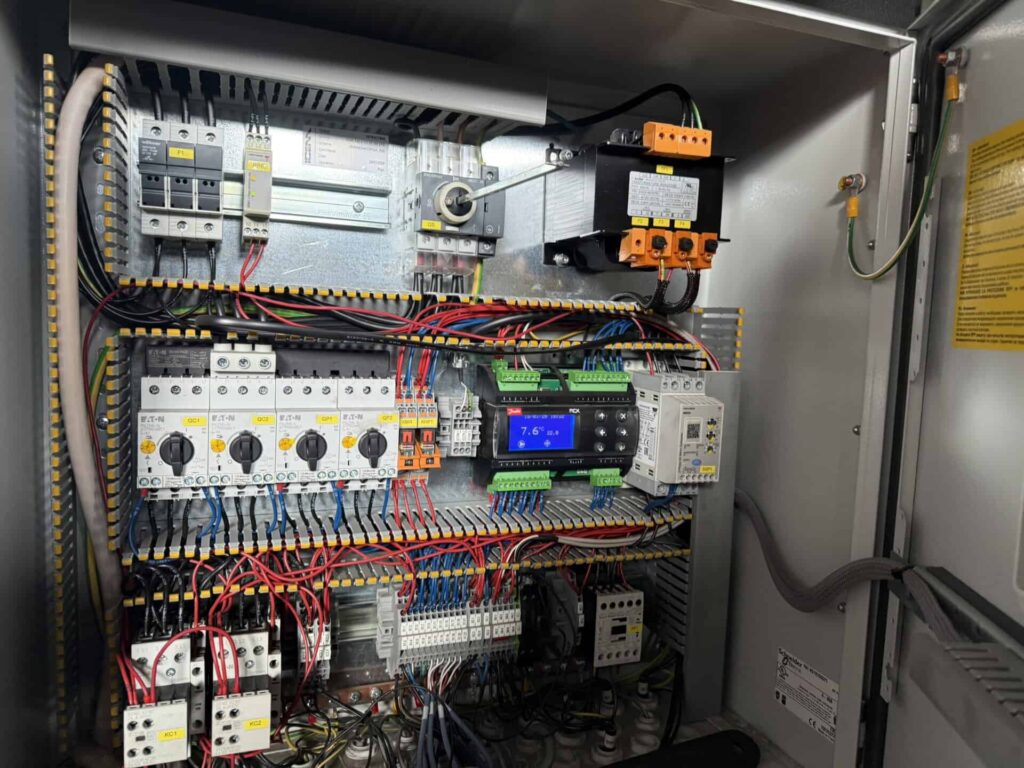
Redundancy and continuity
Critical areas should not depend on a single chiller, pump or controller. In practice we see three levels: N+1 for chillers and pumps, a second power supply or a generator for the cooling of critical rooms, and an emergency cooling connection for a mobile unit. The last is cheap to install during a planned stop and saves days in an emergency, because a rental unit from our partner ChillerTech can be connected without draining the system.
MRI scanners deserve special attention. The cold head compressor of a magnet needs cooling water continuously; if it stops, helium boil-off increases and a long interruption can lead to a quench. Such systems need a backup chiller or a mains water emergency supply, tested regularly, not only drawn on a schematic.
Validation, change control and documentation
- We work to your change control: no setpoint, sensor or component is changed without approval, and replacements are like for like unless a change has been agreed.
- Every visit ends with a report listing the measured values, the measuring points and the instruments used, so the data can be compared and reviewed.
- Replaced parts are listed with their type and, where available, serial numbers.
- For leak checks we document results under Regulation (EU) 2024/573 and update the equipment records.
- Before and after a repair we record the key process temperatures so that the effect of the work can be shown.
Equipment we service
Chillers and process cooling
Air-cooled and water-cooled chillers with scroll and screw compressors, glycol circuits, plate heat exchangers and pump groups, including Siemens PLC controls with web visualisation and alarms by SMS or e-mail. See chiller service and repair.
Precision air conditioning
Units in laboratories, server rooms and control rooms: refrigerant circuit, humidifiers, reheaters, EC fans, filters and controllers. See precision air conditioning repair.
Air handling units
Cooling and heating coils, fans and inverters, heat recovery and frost protection in AHUs that supply cleanrooms. See air handling unit service.
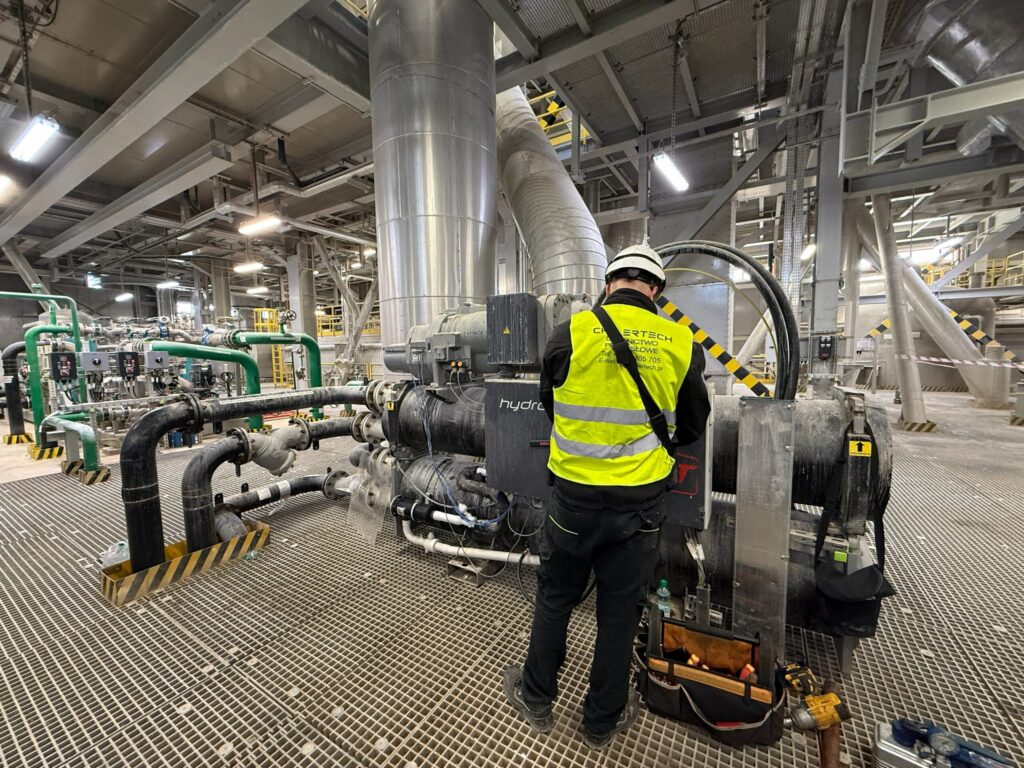
Typical failures and their effect
- Cleanroom temperature or humidity out of range after a chilled water valve actuator or a humidifier fails.
- Chiller trips during a heat wave because the condensers were not cleaned before the season.
- Drifting sensors that make the building management system report correct values while the room is out of specification.
- Glycol degradation in process circuits, leading to corrosion and leaking heat exchangers.
- Pumps without standby or with a standby that has not run for a year and is seized.
We recommend checking the critical chain, from chiller to room sensor, at least twice a year and comparing room sensors with a reference instrument at each inspection.
How a typical cooperation looks
- Inventory of the cooling equipment that serves GMP areas or medical devices, with criticality.
- Diagnostics with measurements and a written assessment of redundancy and weak points.
- An agreed maintenance plan with fixed dates, coordinated with production or the hospital schedule.
- Repairs and modernisations under your change control, with documentation for your quality unit.
Questions from maintenance teams
Can you work inside cleanrooms?
Yes, following your gowning and access procedures. Most cooling work is done outside the classified area, at the AHU and in the plant room, which keeps intervention in the room to a minimum.
Do you supply documents for our qualification files?
We supply service reports with measured values, lists of replaced parts and leak check records. Qualification protocols themselves remain with your validation team, and we support them with data.
Are you an authorised service of the equipment manufacturer?
No. SKiC is independent and works after the warranty has ended. For equipment still under warranty, the manufacturer’s service should be used.
How quickly can a temporary chiller be connected?
That depends on availability and on whether an emergency connection exists. With prepared connections and power supply, a rental unit can be in operation within a working day after delivery.
Make your critical cooling auditable
Send us the list of equipment serving your critical areas, and we will propose an assessment and a documented maintenance plan.