
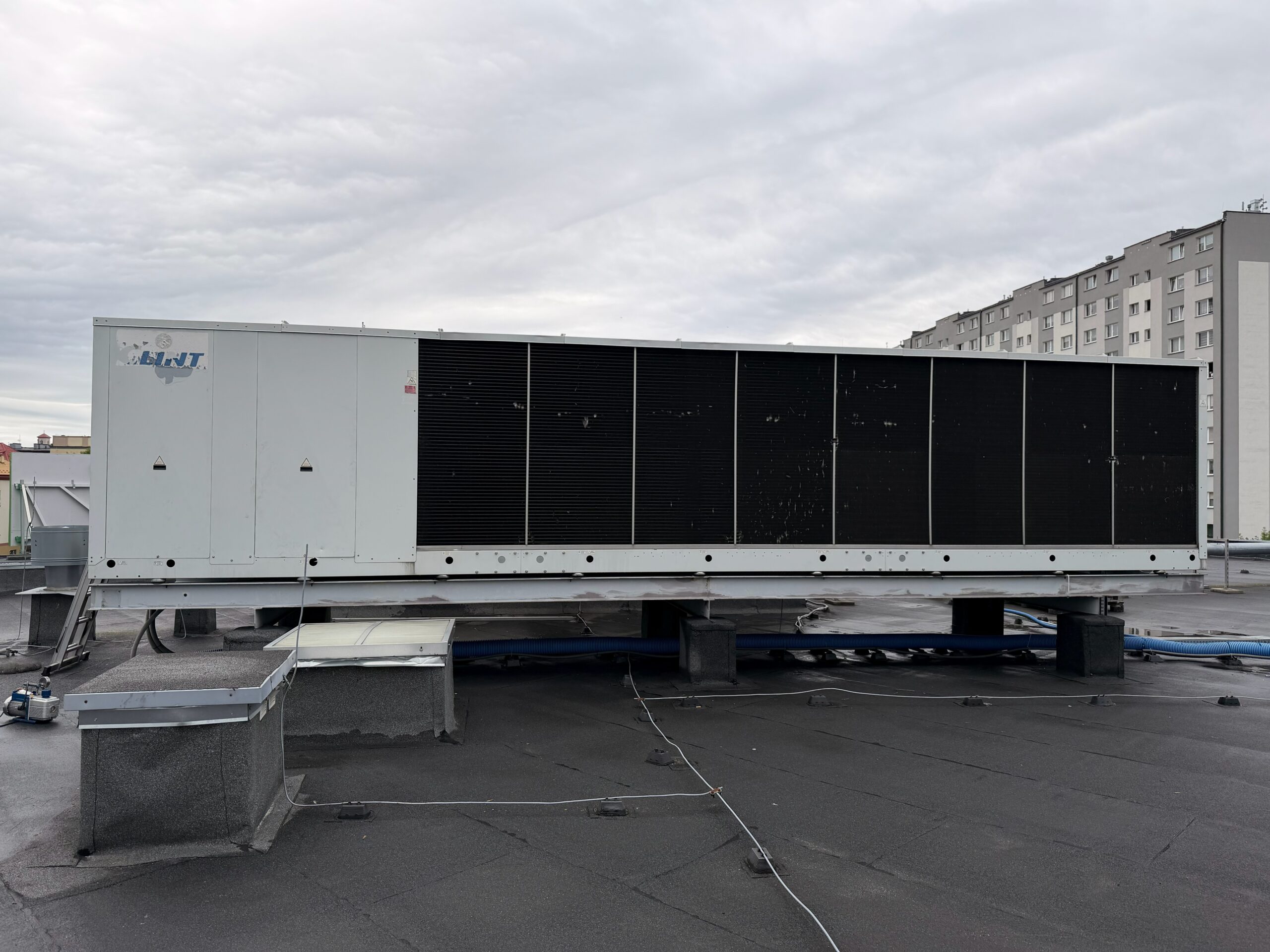
Chemical process cooling
Chemical processes need cooling at low temperatures with a dependable reserve, because an exothermic reaction cannot be paused. SKiC services glycol and brine chillers, builds stainless steel circuits and adds the redundancy and alarms that keep reactors under control.
F-gas company certificate. A report with measurements after every visit. Mobile service in Poland and the EU.
Cooling needs in chemical production
Heat has to be removed from reactor jackets and coils, from condensers in distillation and solvent recovery, from crystallisers and from storage tanks of temperature sensitive products. Unlike in machine cooling, the temperature is often below zero and the consequence of a failure is not only lost output but a process safety issue.
| Application | Typical coolant temperature | Medium |
|---|---|---|
| Reactor jacket, exothermic reaction | minus 10 to plus 10 °C | Glycol or brine |
| Solvent recovery condenser | minus 20 to minus 5 °C | Glycol, low temperature brine |
| Crystallisation | minus 15 to plus 5 °C, controlled ramp | Glycol |
| Product storage | 2 to 15 °C | Chilled water or glycol |
| Vacuum pumps, compressors | 15 to 30 °C | Cooling water |
Load and tolerances
The cooling load of a batch reactor is anything but constant. During dosing of a reactant the heat release can be several times the average, and the cooling system must deliver that peak at the required temperature. We size and check plants against the peak, with a reserve agreed with the process engineers, and look at how fast the chiller responds when the jacket valve opens. Typical required stability at the reactor inlet is ±1 K, for crystallisation profiles often tighter.
Glycol and brine circuits
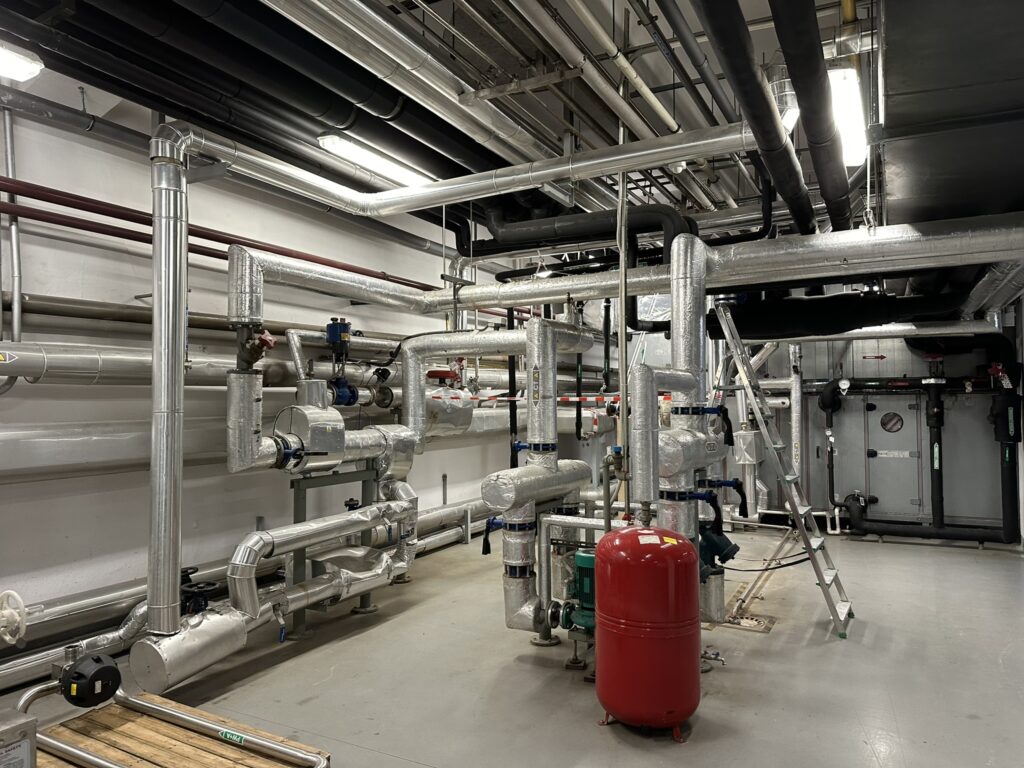
Ethylene glycol has better heat transfer and lower viscosity, propylene glycol is used where toxicity matters. As orientation, a 30 percent ethylene glycol mixture freezes at about minus 16 °C and 40 percent at about minus 25 °C, while propylene glycol needs a higher concentration for the same protection. The mixture should give a freezing point at least 5 K below the lowest evaporating temperature, not only below the supply temperature.
Glycol degrades. Oxidation produces acids, the pH drops below about 7.5 and the inhibitors are consumed; then steel and copper corrode and plate heat exchangers start to leak. We measure concentration, pH and appearance at every inspection and recommend inhibitor top-up or replacement before damage starts.
Stainless steel installations
Where the coolant may contact process media, or where the plant atmosphere is aggressive, we build circuits in stainless steel (1.4301 or 1.4404) with welded or pressed joints. Our installers hold brazing certificates to EN 13585, and we hold UDT qualifications for pressure equipment.
Safety and redundancy
- N+1 chillers, so that loss of one unit does not reduce cooling below the peak demand of the running reactors.
- Duty and standby pumps with automatic changeover on a flow alarm, not only on a motor fault.
- A buffer tank with enough cold volume to bridge a chiller restart or a pump changeover.
- Controls and pumps on a protected power supply, with chiller restart after power return.
- Independent temperature and flow alarms to the control room, plus SMS or e-mail alarms from a Siemens PLC.
- Where a chiller would stand in a hazardous area, the plant explosion protection document decides; usually the unit is placed outside the zone and the cold is brought in by the secondary circuit.
Typical failures and their consequences
- Leaking reactor jacket or condenser, mixing product into the glycol or glycol into the product. We test the glycol for contamination and pressure test the suspected exchanger.
- Corroded plate heat exchanger after years of degraded glycol, ending in a refrigerant to brine leak and water in the refrigerant circuit.
- Evaporator freezing when the glycol concentration has been diluted by refills with water.
- Compressor overheating at low suction pressure, often from a long-term undercharge or a worn expansion valve.
- Pump seal failures caused by crystallised glycol or solids in the circuit.
Each of these may force a batch to be stopped, held or discarded. Most are visible in advance in the trends of pressure, temperature and glycol quality.
How SKiC works in chemical plants
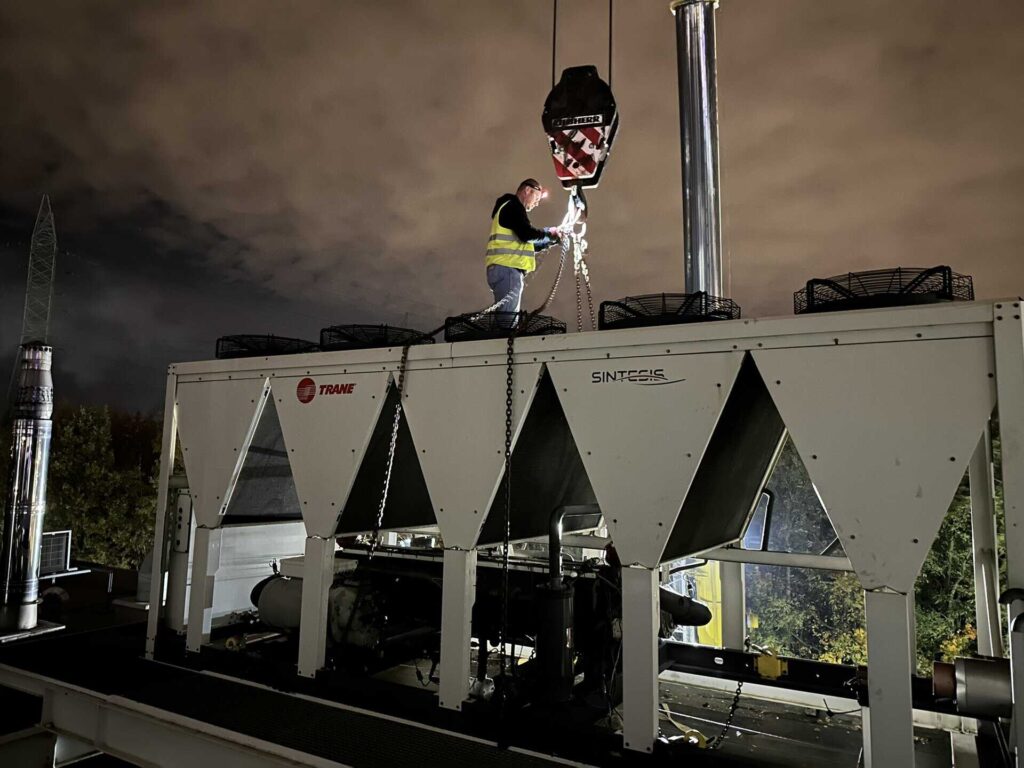
We work under your permit to work and safety rules, with plant induction for our technicians. Diagnostics cover the refrigerant circuit, the coolant circuit and the controls, with measurements recorded in a report after every visit. Repairs range from leak search and compressor replacement to complete heat exchanger exchanges. For older plants we offer a refrigeration system audit with a priority list, and new circuits through refrigeration system design. Leak checks follow Regulation (EU) 2024/573: a low temperature unit with 40 kg of R404A (156.9 t CO2 eq.) needs a check every 6 months, or every 12 months with a leak detection system.
Questions from maintenance teams
Should we use ethylene or propylene glycol?
Ethylene glycol where there is no risk of contact with food or people and best heat transfer matters; propylene glycol where toxicity is a concern. Mixing the two, or mixing inhibitor packages from different suppliers, should be avoided.
How do we know the glycol is degraded?
A pH below about 7.5, a dark or cloudy appearance, sediment in strainers and a smell of acid are clear signs. We measure on site and recommend a laboratory analysis where the circuit is large.
Can a chiller restart automatically after a power cut?
Most units can, if the controller is set to do so and the control supply is protected. We check and document this setting, because many units leave the factory with manual restart.
Do you work in plants with explosion protection zones?
We work under the plant’s safety rules and do not place standard units inside hazardous zones. The equipment is installed outside, with the secondary circuit taking the cooling to the process.
Keep your reactors under control
Send us the process temperatures, the coolant data and the unit nameplates, and we will propose diagnostics or an audit of the plant.