
Applications
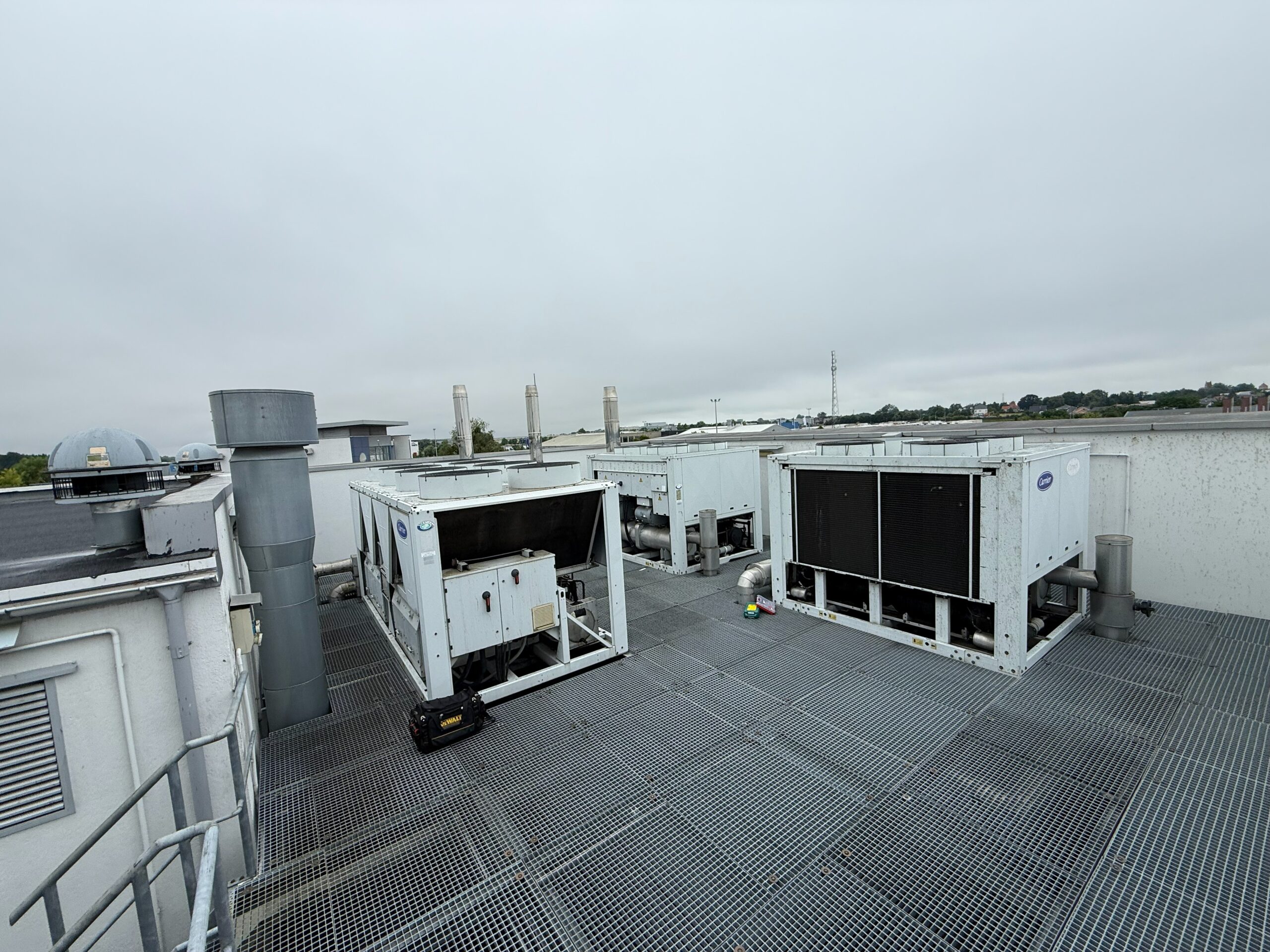
SKiC services the cooling that keeps production, processes and buildings running: process chillers, glycol circuits, oil coolers, precision air conditioning, rooftops and the controls around them. This page shows the industries we work in and what each of them expects from its cooling.
F-gas company certificate. A report with measurements after every visit. Mobile service in Poland and the EU.
Why the application matters more than the brand
The same air-cooled scroll chiller can run a moulding shop, a brewery cellar or a server room. The refrigerant circuit is identical, but the setpoint, the permitted deviation, the consequence of a trip and the right maintenance interval are completely different. A 2 K overshoot is irrelevant in an office building, causes sink marks on a precision moulded part and can invalidate a pharmaceutical batch. For that reason every job at SKiC starts with a question about what the cooling actually serves, not only with the nameplate data.
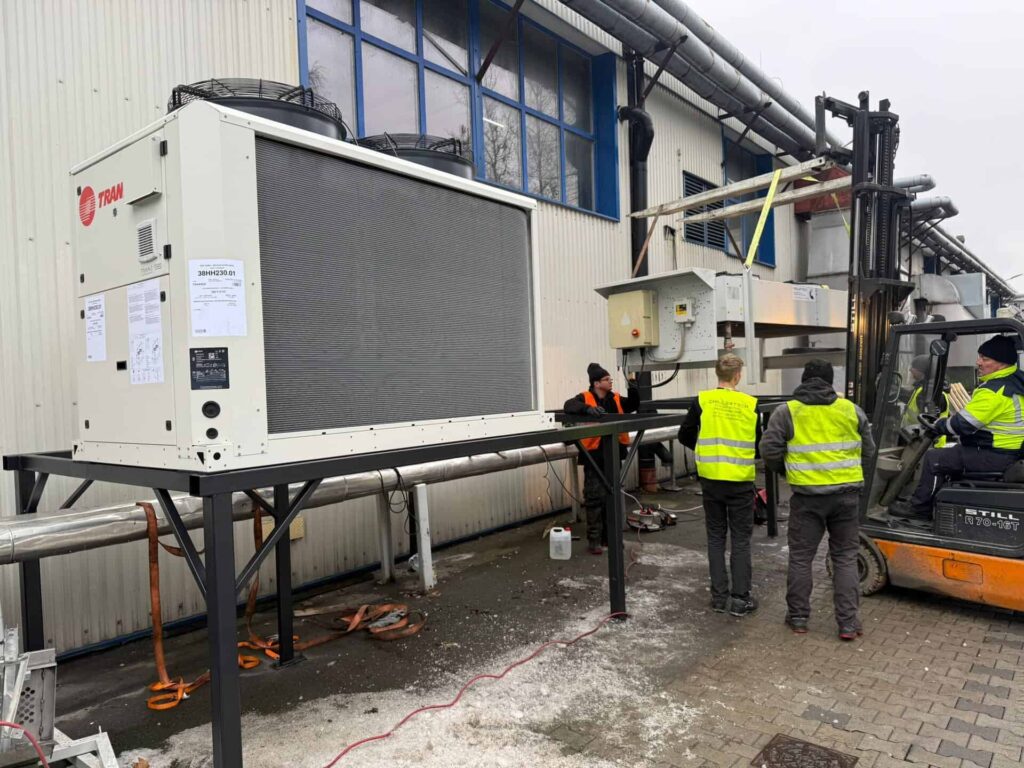
Our technicians have worked in industrial refrigeration for over 20 years. We are independent, we are not an authorised service of any manufacturer and we work on units after the warranty has ended. Our mobile teams travel across Poland and the EU, and units that are better repaired on a bench go to our workshop in Wałsnów.
Industries we support
The table gives a first orientation. Each industry has its own page with typical temperatures, failure patterns and the way we service and modernise the installation.
| Industry | Typical medium and temperature | What is critical |
|---|---|---|
| Production lines | Chilled water or glycol, 7 to 15 °C supply | Stable supply temperature, redundancy |
| CNC machines | Spindle and hydraulic oil, machine temperature ±1 K | Thermal stability, dimensional accuracy |
| Injection moulding | Mould water 8 to 15 °C, hydraulic oil 40 to 50 °C | Cycle time, water quality, condensation |
| Chemical processes | Glycol or brine, minus 20 to plus 10 °C | Heat removal reserve, corrosion, safety |
| Food and beverage | Ice water 1 °C, glycol minus 5 °C, cold rooms 0 to 4 °C | Hygiene, temperature records, F-gas |
| Pharma and medical | Process water, cleanroom air 20 to 22 °C | Validation, documentation, redundancy |
| Data centres | Supply air 18 to 27 °C, chilled water 10 to 20 °C | Continuity, free cooling, alarms |
| Printing | Fountain solution 10 to 15 °C, ink rollers 20 to 28 °C | Dampening quality, conductivity, alcohol |
| Retail and logistics | Hall air 18 to 26 °C, cold stores 0 to 8 °C and below | Many sites, planned maintenance |
Production and machining
Production lines
Assembly, extrusion, coating and packaging lines usually run on a central chilled water or glycol system with a buffer tank, pumps and several consumers. The weak points are the hydraulics as much as the chiller: blocked strainers, unbalanced branches and pumps without a standby. See production line cooling.
CNC machines
Machine tools need oil coolers that keep the spindle and the machine structure at a constant temperature, because steel grows by about 11.5 µm per metre and kelvin. A clogged condenser on a small oil cooler is enough to push a part out of tolerance. See CNC machine cooling.
Injection moulding
Mould cooling is often more than half of the cycle time. We look at chilled water for the moulds, a warmer circuit for hydraulic oil that can run on free cooling for most of the year, and water treatment that keeps the mould channels open. See injection moulding cooling.
Process industries
Chemicals
Reactor jackets, condensers for solvent recovery and crystallisers need low temperatures and a reliable reserve of cooling capacity, because exothermic reactions do not wait. Stainless steel pipework and glycol chemistry are part of the job. See chemical process cooling.
Food and beverage
Breweries, dairies and food plants combine glycol for fermentation and process cooling with cold rooms and freezers. Hygiene, temperature documentation for HACCP and the phase-down of high GWP refrigerants shape every decision. See food and beverage cooling.
Pharmaceutical and medical
Validated processes, cleanrooms, laboratories and medical imaging need redundant cooling and a service partner who works under change control and leaves complete documentation. See pharmaceutical and medical cooling.
IT, printing and logistics
Data centres and server rooms
Precision air conditioning units, chillers with free cooling and the alarms between them decide whether a failure of one unit is a non-event or an incident. See data centre cooling.
Printing
Offset presses rely on offset dampening units, alcohol dosing, ink roller temperature control and conductivity measurement. We service technotrans and Baldwin equipment. See printing industry cooling.
Retail and logistics
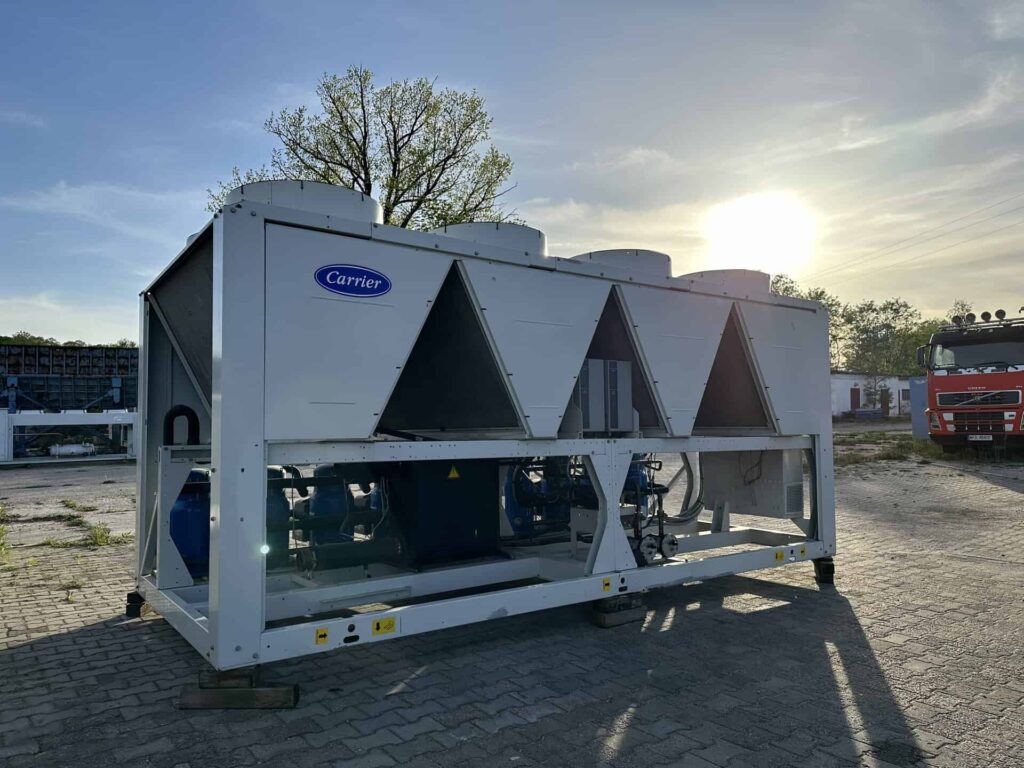
Retail parks and warehouses run dozens of rooftops, air handling units and condensing units spread over many sites. Here planned maintenance and clear reporting per unit save the most money. See retail and logistics cooling.
How we work in every industry
- You send us the unit data, photos of the nameplates and a description of the symptom by e-mail or through the form.
- We carry out diagnostics with measurements: pressures, superheat and subcooling, water and air temperatures, flow, motor currents and insulation resistance.
- You receive a report with the measured values, photos, the cause of the fault and a priced proposal.
- We repair on site or in the Wałsnów workshop, or propose a modernisation when a repair no longer makes economic sense.
- Where it pays off, we set up planned maintenance and remote alarms so that the next fault is found before production notices it.
Equipment and work in our scope
- Air-cooled and water-cooled chillers with scroll, screw and reciprocating compressors.
- Oil coolers, industrial coolers, dry coolers and free cooling modules.
- Precision air conditioning, air handling units and rooftop units.
- Condensing units and cold rooms, refrigerated containers and compressed air dryers.
- Pumps, buffer tanks, plate heat exchangers and pipework in steel, stainless steel and press fittings.
- Controls built on Siemens PLC with HMI panels, web visualisation and SMS or e-mail alarms.
- F-gas leak checks under Regulation (EU) 2024/573 and entries in the equipment records.
If a unit has to be replaced or a temporary unit is needed during an overhaul, our partner company ChillerTech supplies new and refurbished chillers and rental units. More on chiller selection and supply and chiller rental.
Questions from maintenance teams
Our industry is not listed. Can you still help?
Very likely. The pages above cover the most common cases, but the physics is the same in a laboratory, a galvanising plant or a cold store. Describe the process, the required temperature and the equipment, and we will tell you honestly whether it is within our scope.
Do you service all brands?
Yes. We work on Trane, Carrier, Daikin, York, Aermec, Clivet, Climaveneta, Lennox, CIAT, Riedel, MTA, Clint, Hiross, Blue Box, Stulz, technotrans, Baldwin and others, independently and after the warranty period.
What does a visit outside Poland cost?
Diagnostics on site from 800 EUR net, labour 115 EUR net per hour and travel 0.75 EUR net per km. After the diagnostics you receive a written quotation for the repair.
Do you offer emergency standby around the clock?
No. We do not run a 24/7 standby. Instead we help you build redundancy, spare parts stock and remote alarms, so that a single failure does not stop production and can be handled during working hours.
What information do you need for a first quotation?
Manufacturer, model and serial number, refrigerant and charge, the required temperatures, the alarm history from the controller and a few photos of the unit and its surroundings.
Tell us what your cooling serves
Send the process description and unit data and we will propose diagnostics, a repair or a maintenance plan that fits your industry.