
Water and hydraulic pump repair
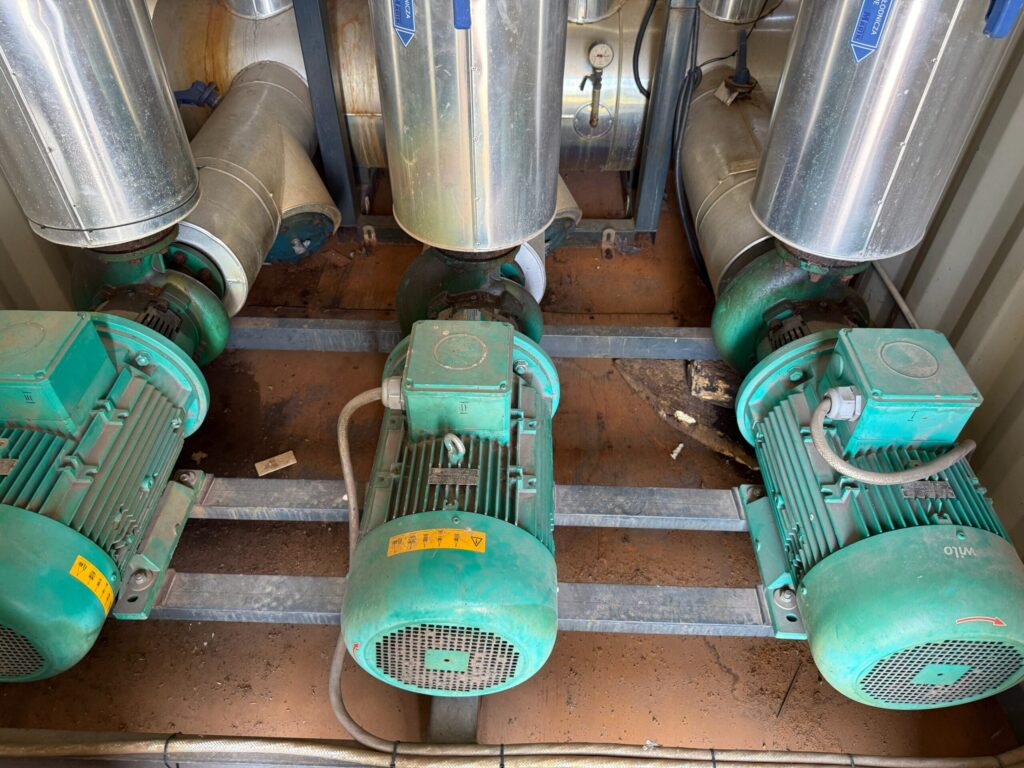
Pump repair for circulation pumps in chilled water, glycol and heating circuits and for pumps in process coolers. We replace mechanical seals and bearings, test motors, regenerate pumps in our workshop and select replacements when repair is not worth it.
F-gas company certificate. A report with measurements after every visit. Mobile service in Poland and the EU.
Pumps decide whether cooling reaches the process
A chiller can be in perfect condition and the process still overheats if the pump does not deliver the design flow. Pumps run continuously, often for years without attention, and their faults develop slowly: a seal that weeps a little glycol, a bearing that becomes noisy, an impeller worn by cavitation. Planned pump repair costs a fraction of an emergency replacement during production, and it avoids the frost and flow alarms that a failing pump causes in chillers and heat pumps.
Typical faults and their causes
Leaking mechanical seal
The most common fault. Seals fail from dry running after draining or air pockets, from abrasive particles left after installation work, from glycol that has degraded or crystallised on the seal faces, and from temperatures outside the seal rating. We choose seal materials for the medium: for glycol circuits, faces and elastomers suitable for the glycol type and temperature range.
Bearing noise and vibration
Worn motor bearings, misalignment between motor and pump on base-plate pumps, or a damaged coupling. Leaking seals often wash out bearings that sit below them.
Cavitation
A crackling noise, falling head and pitting on the impeller. Causes include system pressure that is too low, a blocked suction strainer or a pump operating far to the right of its curve. Raising the static pressure or cleaning the strainer often removes the cause; the damaged impeller must still be replaced.
Motor tripping
Overload because the pump runs at a higher flow than designed, a seized shaft, winding insulation damage from moisture, or a single-phase fault.
Motor checks
- Insulation resistance to earth measured at 500 V or 1000 V depending on the motor voltage; values below about 1 MΩ mean the motor must not be restarted before drying or rewinding.
- Winding resistance of the three phases, which should agree within a few percent.
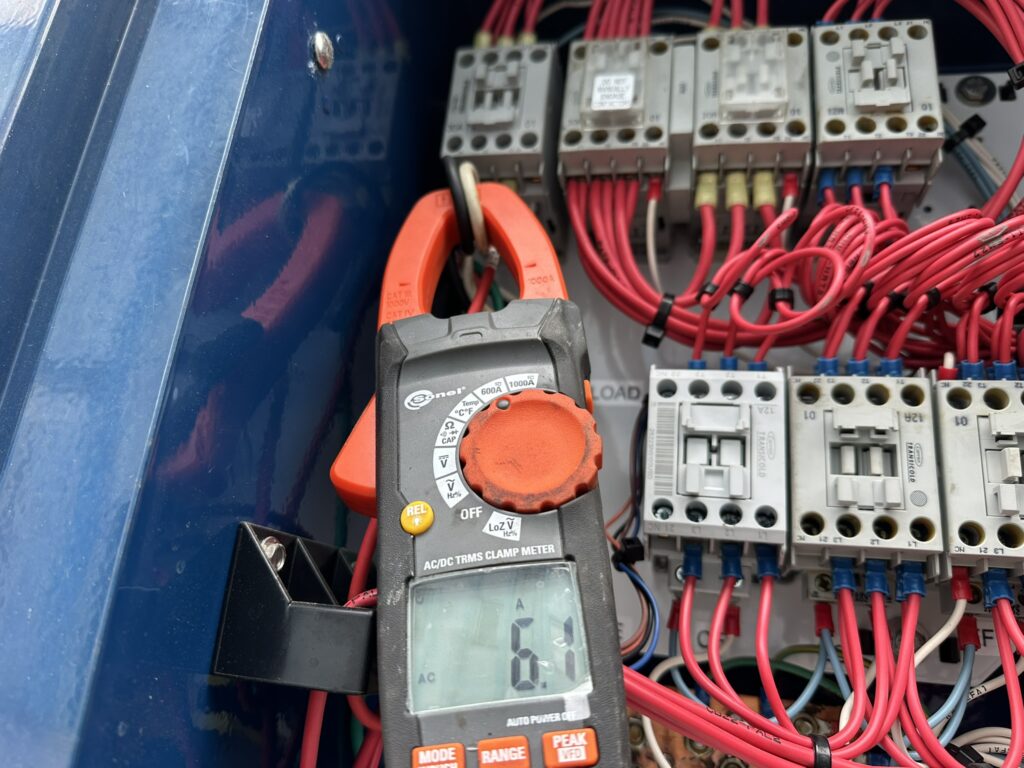
- Running current compared with the nameplate and with the operating point.
- Vibration and bearing temperature.
- Function of the inverter or the electronic speed control on integrated pumps.
Regeneration in the workshop
Pumps that can be removed are regenerated in our workshop in Wałsnów. Each pump is dismantled and inspected, and the scope of work is agreed before parts are ordered.
- Dismantling, cleaning and inspection of the casing, impeller, shaft and wear rings.
- Replacement of the mechanical seal, bearings and all gaskets.
- Impeller replacement where erosion or cavitation damage is found.
- Motor checks and, where needed, bearing replacement or rewinding through a specialised partner.
- Assembly, alignment, pressure and leak test, test run and measurement of current.
For pumps that cannot be removed without stopping a critical circuit, we replace seals and bearings on site during a planned stop, after preparing the parts in advance from the nameplate data.
Repair or replacement
| Situation | Recommendation |
|---|---|
| Leaking seal, sound casing and impeller | Repair: seal and bearings |
| Cavitation damage on the impeller, cause removed | Repair with a new impeller |
| Corroded casing, obsolete model, no parts available | Replacement |
| Pump far from its operating point, throttled with a valve | Replacement with a correctly selected pump, often with speed control |
| Old standard motor running all year | Consider a high-efficiency motor or a new pump set |
Water quality and pump life
The condition of the circulating medium has more influence on seal and bearing life than the pump brand. Magnetite sludge from steel pipework, welding residue after modifications and glycol without active inhibitors all wear seal faces and block the small clearances of wet-rotor pumps. When we repair a pump we also check the medium: glycol concentration and pH, visible particles in the strainer and the state of the dirt separator if one is installed. Where the circuit is dirty, we recommend flushing or a magnetic dirt separator before the regenerated pump goes back, otherwise the repair will not last.
Selection of replacements
A replacement pump is selected from the measured operating point, not from the old nameplate alone. We measure the differential pressure and, where possible, the flow, and compare them with the curve. Many pumps in older installations are oversized and throttled; a correctly sized pump with speed control can deliver the same flow at a much lower power. We check dimensions and connections so that the new pump fits the existing pipework, or we adapt the pipework as part of our chilled water installations work.
Pumps are part of every process cooling system and are built into most industrial coolers, which we service as a whole.
Questions from maintenance teams
Can a twin pump run on one pump while the other is repaired?
Yes, if the duty pump can deliver the required flow alone. We check this before removing the second pump.
Why does the new seal leak again after a few months?
Usually because the cause was not removed: air in the system, dirt, degraded glycol or dry running. We check the circuit together with the pump.
Do you repair pumps from oil coolers?
Yes, including gear pumps in oil coolers; see oil cooler repair.
Can you supply a new pump quickly?
For standard sizes, usually yes. We confirm availability and delivery time with the quotation.
Pump leaking or noisy?
Send photos of the pump and motor nameplates and a description of the symptoms, and we will propose repair or replacement.