
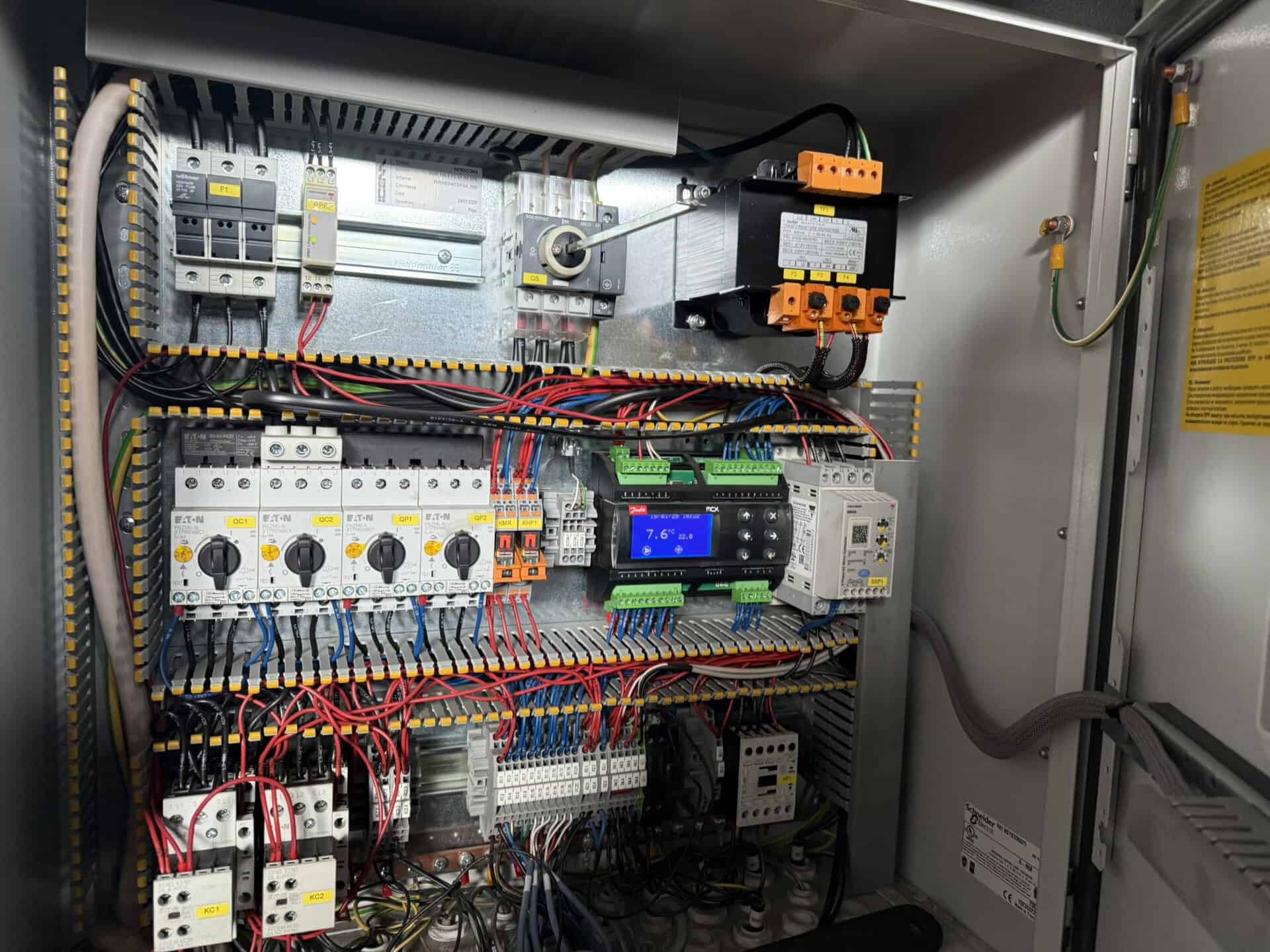
Air handling unit service
AHU service at component level: coils, fans and belt drives, inverters, heat recovery, filters, dampers and controls. We measure air flow, pressures and temperatures, repair what limits the unit and document the result.
F-gas company certificate. A report with measurements after every visit. Mobile service in Poland and the EU.
Beyond the seasonal inspection
A seasonal check of rooftops and air handling units is described on our AHU and rooftop service page. This page covers the deeper work: what we do when an air handling unit cannot reach its air flow, trips its inverter, freezes its coil in January or recovers far less heat than the nameplate promises. AHU service at this level means taking the unit apart section by section and measuring each one.
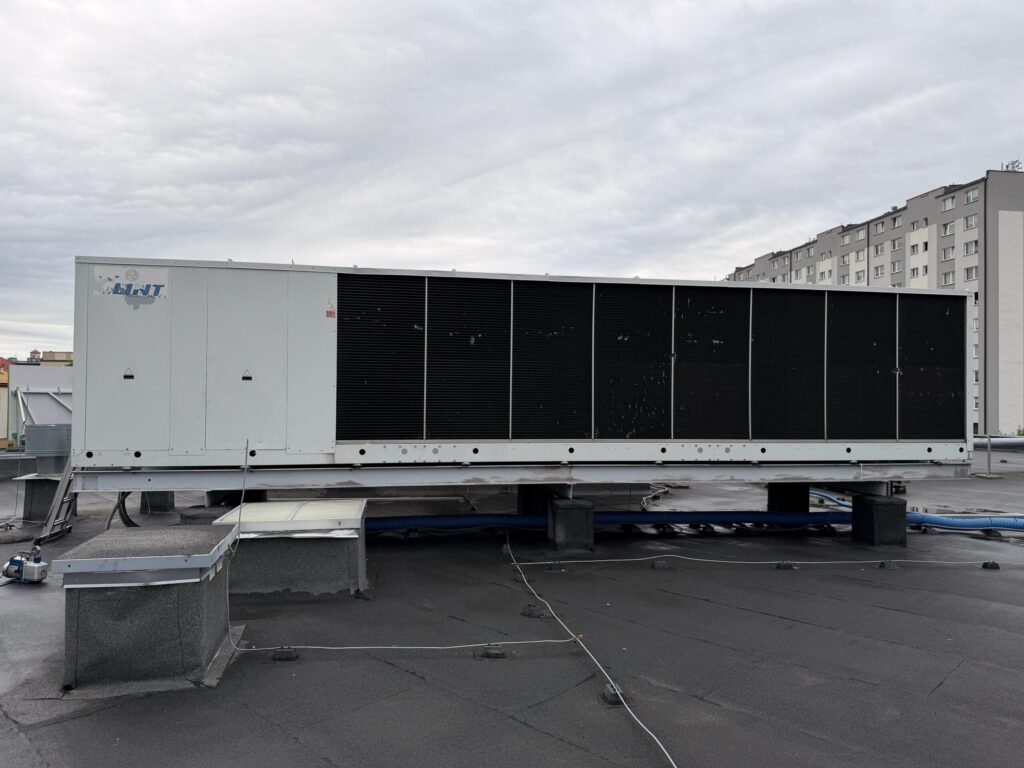
Components and what we check
| Section | Checks and measurements | Typical faults |
|---|---|---|
| Filters | Pressure drop against initial and final values, seal of the filter frames | Bypass around frames, filters changed by calendar instead of pressure drop |
| Fans | Air flow, static pressure, current, vibration, bearing noise | Worn bearings, unbalanced impeller, EC module failure |
| Belt drives | Belt tension, pulley alignment, wear of grooves | Slipping belts, broken belts, overheated motor bearings |
| Inverters | Parameters, motor data, fault log, DC bus voltage, cooling of the drive | Overcurrent and overvoltage trips, earth faults, wrong ramp times |
| Heating and cooling coils | Water temperatures, valve stroke, air side pressure drop, leaks | Frost damage, fouled fins, seized valve actuators |
| Heat recovery | Temperature efficiency, leakage, drive and bypass function | Stopped wheel, frozen plate exchanger, failed pump in run-around circuit |
| Dampers and drain | Actuator function, end positions, condensate trap | Outdoor damper open when unit is off, dry or wrong siphon |
Fans and inverters
Most units built in the last decade use direct-driven plug fans with EC motors or with standard motors on inverters. Older units still run belt drives. On belt drives, a belt that slips by a few percent reduces air flow without any alarm, and misaligned pulleys destroy bearings within months. We measure the actual fan speed and compare it with the design.
Inverter trips are seldom caused by the inverter itself. Overcurrent on acceleration points to ramp times that are too short or a mechanically stiff fan; overvoltage on deceleration points to a ramp-down that is too fast for the inertia of a large impeller; earth faults point to motor insulation or damaged cables. We read the fault log, check motor data and constant pressure control parameters, measure motor insulation resistance and only then decide whether the drive needs replacing. When it does, we transfer the parameters and test the unit at full and minimum air flow.
Heat recovery
The temperature efficiency of a heat recovery section is calculated as (supply air after recovery minus outdoor air) divided by (extract air minus outdoor air). Rotary wheels typically reach 70 to 80 percent and plate exchangers 60 to 80 percent, run-around glycol circuits about 45 to 60 percent. A measured value far below these ranges indicates a fault.
Rotary wheels
We check the drive belt and motor, the speed control signal, the brush seals and the purge sector. A stopped wheel often goes unnoticed in summer and becomes visible only as higher heating demand in winter.
Plate exchangers
Frosting on the extract side at low outdoor temperatures blocks the air flow. The defrost or bypass damper function must work, and the condensate drain must be free and protected against freezing.
Run-around circuits
These are small glycol systems with a pump, a valve and two coils. We check glycol concentration, pump operation, venting and the control valve.
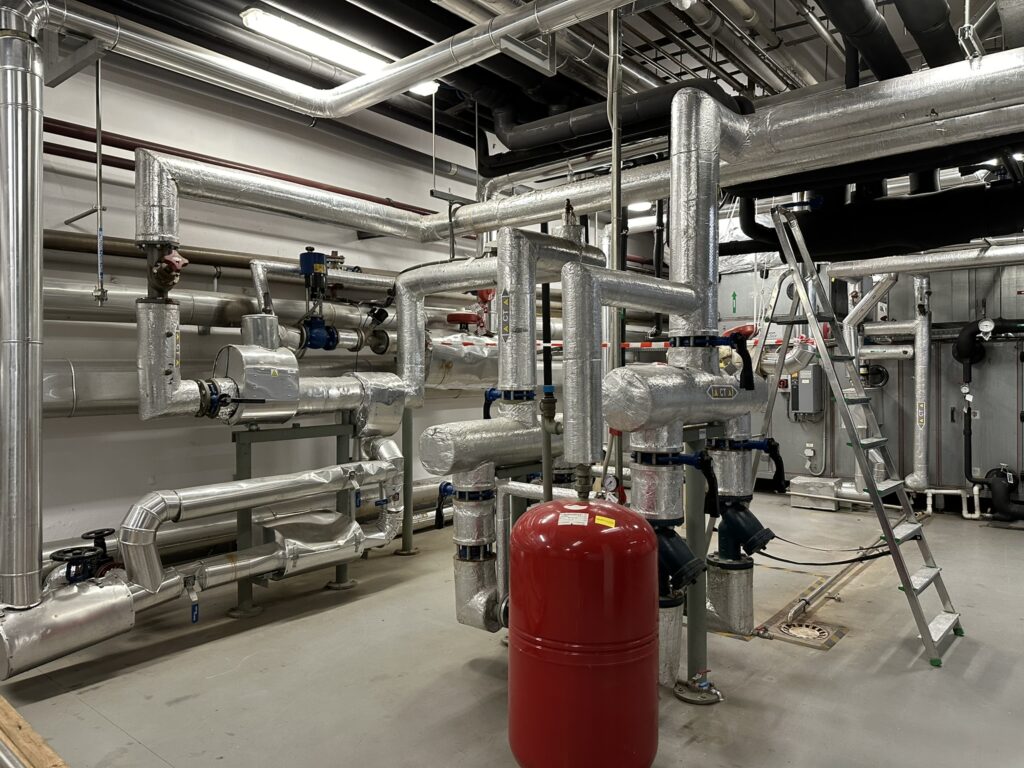
Coils and frost protection
A burst heating coil is the most expensive single fault in an air handling unit. Frost protection depends on several elements working together, and we test them all:
- Frost thermostat with a capillary across the full face of the coil, typically set at about 5 °C air temperature.
- Return water temperature sensor of the heating coil, with a minimum value that triggers protective action.
- Heating valve opening fully in frost mode, and the pump of the heating circuit running.
- Outdoor air damper closing tightly when the unit stops.
- Preheating sequence at start-up in winter.
If a coil is already damaged, see our page on water heating coil repair. Cooling coils need a working condensate drain with a correctly sized trap; a dry or missing trap lets the fan suck air through the drain and water stays in the tray.
Controls
We check sensors, sequences, setpoints and schedules, and the interface with the building management system. Where the original controller is obsolete, we build a new control panel with a Siemens PLC, an HMI panel and remote alarms, as described on the controls and remote monitoring page.
Questions from maintenance teams
How do you measure air flow in an AHU?
Plug fans often have a pressure tap on the inlet cone that gives the flow from a fan constant. Otherwise we traverse a duct section with an anemometer or a pitot tube.
Should filters be changed by date or by pressure drop?
By pressure drop, with a maximum interval as a backstop. The final pressure drop recommended by the filter manufacturer is the limit; changing earlier wastes filters, changing later wastes fan energy.
Can you replace an EC fan with a different brand?
Yes, if the air performance, dimensions and control signal match. We check the fan curve against the measured duty point before ordering.
Do you work on AHUs with DX coils?
Yes. DX coils with condensing units are part of our refrigeration work, including leak checks and refrigerant circuit repairs.
Air handling unit underperforming?
Describe the symptoms and send photos of the unit and its control panel, and we will propose a diagnostic visit.