
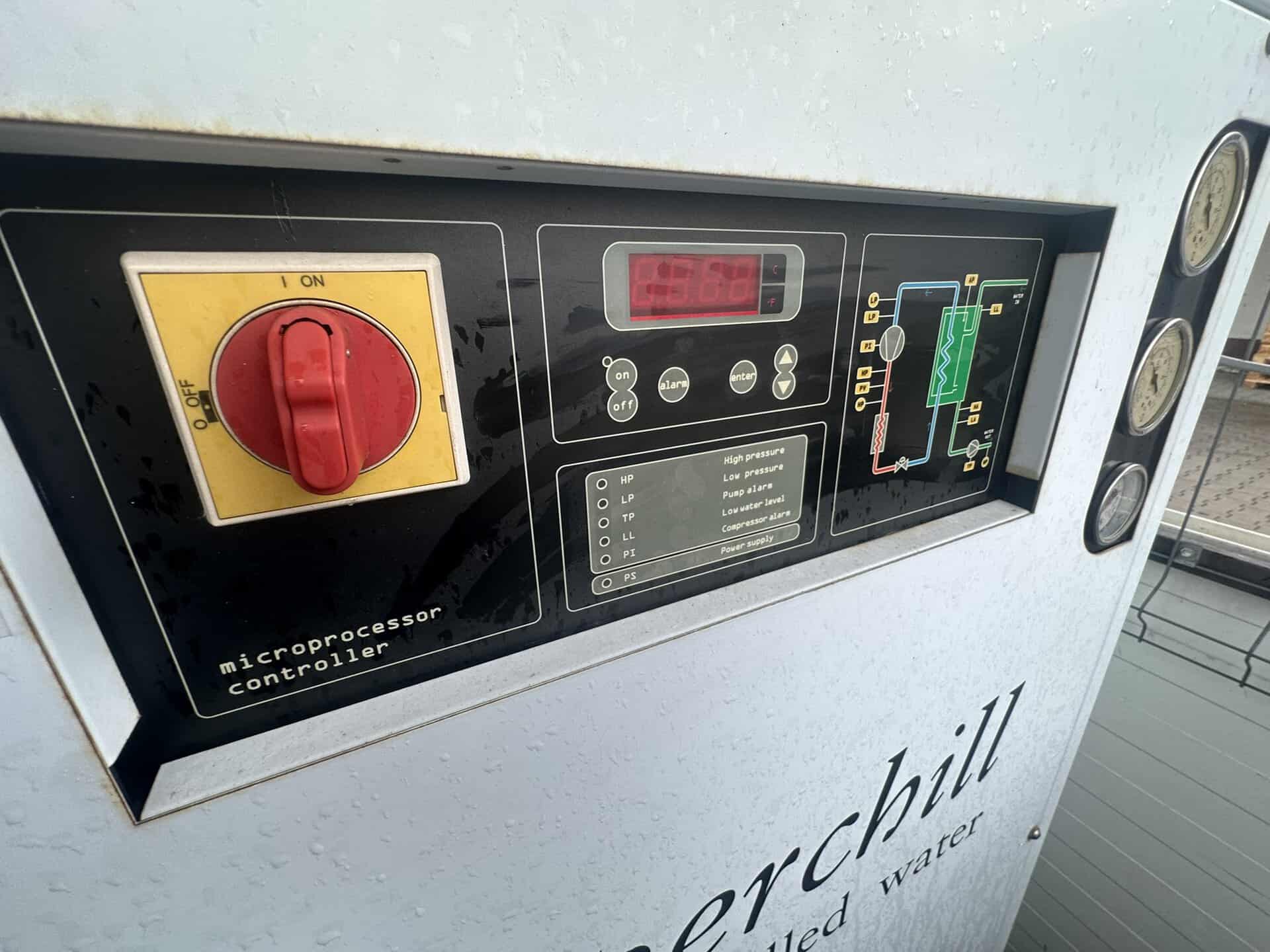
Precision air conditioning repair
Precision air conditioning repair for server rooms, laboratories and production rooms. We repair the refrigerant circuit, humidifiers, heaters, fans and controls of close control units, including Stulz and Hiross equipment.
F-gas company certificate. A report with measurements after every visit. Mobile service in Poland and the EU.
Where precision units differ from comfort cooling
A precision air conditioning unit is designed to run all year, with a high sensible heat ratio, large air flow and control of both temperature and humidity. It is often installed in an N+1 configuration with rotation between units. When one unit fails, the others carry the load, so the fault may go unnoticed until a second unit trips on a hot day. Precision air conditioning repair must therefore be quick and thorough: the unit should return to service with the cause found, not only the alarm reset.
We work on direct expansion units with air-cooled or water-cooled condensers, chilled water units fed by a central chiller and dual-fluid units with both systems.
Refrigerant circuit
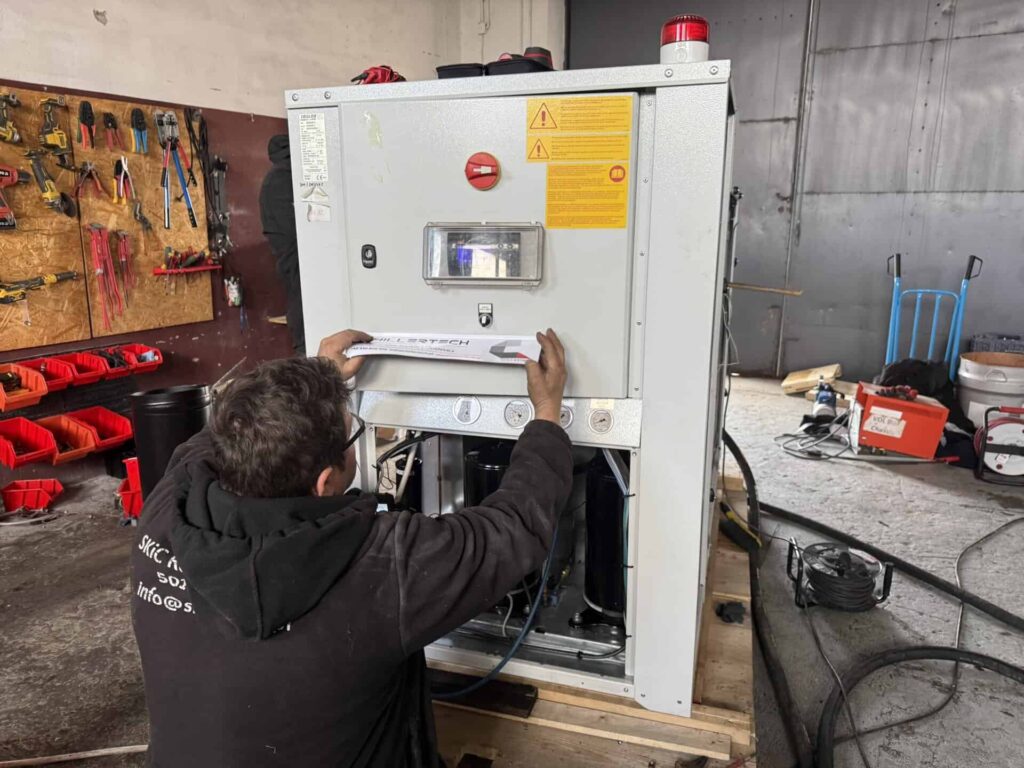
Most breakdowns of DX precision units show up as high or low pressure alarms. We measure pressures, superheat, subcooling and compressor currents and compare them with the room conditions.
| Alarm | Common causes |
|---|---|
| High pressure | Dirty outdoor condenser, failed condenser fan or speed controller, wrong refrigerant charge, outdoor unit in recirculating air |
| Low pressure | Clogged air filters, failed indoor fan, refrigerant leak, faulty electronic expansion valve or its driver |
| Compressor overload | High compression ratio, voltage imbalance, worn compressor, contactor fault |
| Loss of air flow | Filter pressure switch, belt or EC fan failure, air flow sensor fault |
Typical charges of R410A or R407C in precision units mean that many of them fall within the leak check obligation. A unit with 4 kg of R410A (GWP 2088) holds 8.4 t CO2 eq. and needs a check every 12 months under Regulation (EU) 2024/573.
Outdoor condensers and chilled water units
The indoor unit is only half of a DX system. Outdoor condensers on roofs and in yards collect dust and leaves, and their fan speed controllers fail more often than the indoor electronics. We clean the coils, check the head pressure control at low ambient, because winter faults often come from condensing pressure that is too low rather than too high, and verify the refrigerant line insulation.
On chilled water units the refrigerant circuit is replaced by a coil and a control valve. Here we check the valve actuator stroke, the water temperature difference across the coil and the supply temperature from the chiller. A unit that cannot hold the room temperature is often simply receiving water that is too warm or too little of it.
Humidifiers and heaters
Electrode steam humidifiers are among the most frequently failing components. The cylinder scales up with time, the current drops and the unit reports a humidifier alarm. The service life of a cylinder depends on water hardness and conductivity; on hard water it can be a few months. We replace cylinders, clean feed and drain valves and check that the humidifier is not working against the dehumidification mode, which wastes energy and wears both functions.
Electric reheat is used during dehumidification. We check the heater elements, safety thermostats and the contactors, which are often burnt after years of frequent switching.
Fans and filters
Precision units move large air volumes against the pressure of raised floors or ducts. Clogged filters reduce air flow, lower the evaporating temperature and can freeze the coil. We replace filters, measure the pressure drop, check EC fan alarms and bearing noise, and on belt-driven units the belt tension and pulley alignment.
Controls and alarms
The unit controller decides on cooling, heating, humidification and rotation between units. Typical problems we find:
- Temperature and humidity sensors out of calibration, so units fight each other or dehumidify unnecessarily.
- Setpoints far below what the equipment needs; many server rooms can run supply air at 22 to 24 °C instead of 18 °C.
- Rotation and standby functions disabled after a past fault and never restored.
- Alarms not connected to the building management system, so a unit has been off for weeks.
We can connect the units to a central system with SMS and e-mail alarms, as described on our controls and remote monitoring page.
Scope of a repair visit
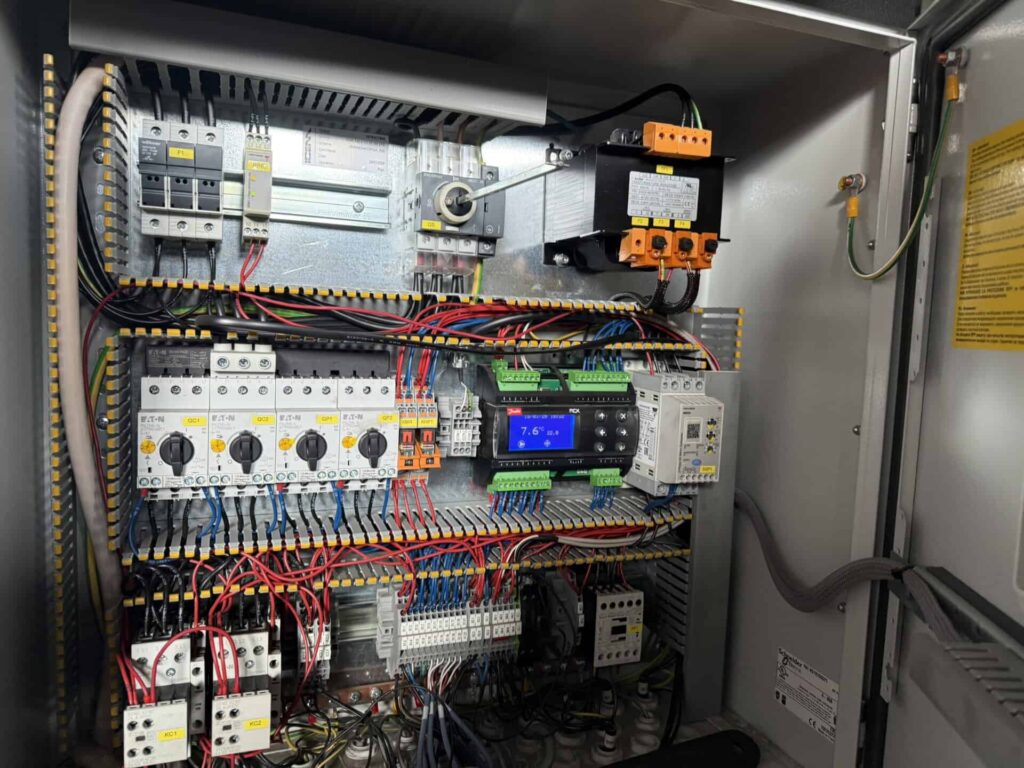
- Readout of the alarm history from all units in the room, not only the failed one.
- Measurement of the refrigerant circuit and the room conditions.
- Repair of the failed component and check of related components.
- Function test of cooling, heating, humidification and dehumidification.
- Test of the changeover to the standby unit.
- Report with measurements and recommendations.
For regular inspections of all units in a server room, see planned maintenance. Chilled water units depend on the central chiller, which we service as well; see chiller service and repair.
Questions from maintenance teams
Can you repair a precision unit during operation of the room?
Yes, if there is a standby unit. We work on one unit at a time and confirm that the others carry the load before switching off.
How often should humidifier cylinders be replaced?
It depends on water quality and running hours. We check the cylinder condition at every inspection and replace it before it fails.
Is it worth replacing an old unit instead of repairing it?
For units running on high-GWP refrigerants with worn compressors, often yes. After diagnosis we compare the repair cost with replacement so you can decide.
Do you service units of all brands?
Yes, including Stulz and Hiross units, as an independent company working after the warranty.
Precision unit in alarm?
Send the unit model and the alarm list, and we will plan the repair with the most likely parts.